Showing posts with label 2014. Show all posts

10/22/2014


Robert Downey Junior attempts a hop, skip and jump from the world of Iron suits to that of gold statuettes with this admittedly heavy-handed but, at times, quite enthralling story of a slick lawyer’s return to his hometown and the defendant he is forced to take on. The case: a puzzling hit and run. The main suspect: his own father.

As most things American, this is a film about father and son, played here by Roberts Duvall and Downey Jr. respectfully. Dad’s an honourable judge in small town Indiana; his prodigal son a hot-shot defence attorney living in Chicago. The younger man returns home to attend his mother’s funeral but is met with little warmth. He’s quick to turn on his heels but the homecoming is unexpectedly prolonged when dad kills a man while out driving that very night. Downey Jr. steps in to defend his old man, not knowing the ethical and emotional conundrums which lay in wait.

The set-up packs a few surprises and, for the most part, it works. Duvall’s staunch geriatric sees the law as something honourable and just; but to his son it’s a malleable profession, open to interpretations. You would hope that such moral Rubik’s cubes would offer director David Dobkin enough to go on but instead we’re forced to swallow whole helpings of sentimental clichés. We could scrap the older brother with the lost baseball career and the younger brother with the disability and still have a fine, presumably more focused, film, but then award season does beckon.

 Indeed, with its heavy handed deliveries and earnest sweeping emotions, The Judge does little to dodge those pitfalls we’ve come to expect around this time of year. And yet, seeing swaggering RDJ and tireless Bobby Duvall duking it out over all that moral code and retribution stuff, I can think of worse ways to spend a cold grey autumn evening.


(Insert courtroom pun ending here).

10/14/2014


9/22/2014


8/21/2014


8/12/2014


7/09/2014


Double Indemnity reviews: Giving heavily talked about films two lines more.

For this grand old age we live in...


The ruffled feathers of Liberal L.A. seemed to think this extraordinary psychological thriller was attempting to masquerade itself as a film about justice, but it wasn't. Make no doubt about it, Katheryn Bigelow's mighty Zero Dark Thirty is rather a staggering, meticulous study in cold, calculated revenge.  

6/05/2014


The Three Burials of Melquiades Estrada
Tommy Lee Jones (2005)

A Mexican illegal is shot dead by a hot headed young boarder cop. His body is first laid to rest in a shallow grave; then gets moved to a state owned lot; before an old friend (Jones, who else?) decides it's time to take him home.


Tommy Lee Jones' first foray behind the director's chair has all the trappings that such a cross over can tend to bring. It's earnest to a tee; packed with perhaps a few too many ideas; and the tone changes inexplicably about halfway through . Indeed, the faults are there for all to see, but The Three Burials of Melquiades Estrada also manages to show the great experience of its director too. 

The ideas might seem plentiful, as was mentioned above, but they're anything but flimsy. On top of that, the writing is slick and, through his excellent cast, it's well delivered; Mellisa Leo and Barry Pepper are particularly astute. 


Jones just followed it up with The Homesman at Cannes this year, the same festival which awarded him best actor for this debut. The second feature is dignified and assured, and boasts a far greater focus than Three Burials could muster, but the earnestness is still there too. 


Who knows, maybe the 67 year old will never quite shake it.

But then perhaps that's no bad thing.


A Matter of Resistance

Jean-Paul Rappeneau (1966)

Catherine Deneuve must suffer a tricky love triangle between her Bourgeois husband and a soldier of the resistance in this slapstick comedy which casts a playful eye over rural France in the weeks leading up to D-Day.

A Hollywood leaning rom-com which still gets laughs almost a full half century later. A Matter of Resistance is not changing any games so to speak but then why should it have to? Indeed, while Godard and his mates were in Paris changing the cinematic landscape, director Jean-Paul Rappeneau hung out in Normandy, sticking to what he knew. 


5/07/2014


Birth
Jonathan Glazer (1994)

Jonathan Glazer followed up his pulsating London gangland debut with this strange, floating, singular film about a woman who loses her husband before believing he's returned in the body of a ten year old child. 

Birth was marred by controversy upon its release, largely due to a daring bathtub scene featuring Nicole Kidman and her very underage co-star Cameron Bright. Ten years on that sequence still holds an eerie quality but it's in no way out of whack with Glazer's film as a whole.

Kidman offers the performance of a lifetime and Bright plays it just as startling by her side. Glazer's imagery, of course, is never in question but he hones those Kubrickian leanings with a remarkable sense of patience and a clear deftness of touch. The plot line seems to boarder on urban mythology at times but the director manages to keep it tantalizingly in check, knowing exactly when to hold firm on reality and knowing exactly when to let go.

The results are just devastating. A forgotten mystery about love and loss which soars across the screen on Alexandre Desplat's breathtaking, counterpointed chords, never allowing you to catch a grip but always letting you think that you can. Birth still sits with 39% on Rotten Tomatoes but, with the celebrated release of Under the Skin this year; people are beginning to take another look. That’s exactly what this writer did and, if you haven’t already, perhaps you should too. 

If the opening minutes don't catch your eye it might be time to find a new hobby.


The Last Temptation of Christ
Martin Scorsese (1988)

Willem Defoe is Christ but not quite as we know it. He gets pinned up to the cross (after about two hours viewing) but before he goes off to kick the proverbial bucket, the Devil shows up to take him on one last lap of temptation 

Although far from outright sensationalism, many a feather was still ruffled when Martin Scorsese brought his radical take on the Crucifixion to the big screen. Perhaps it's a shame, you do get the feeling the catholic raised director was just trying to get a humanist grasp on the man he was brought up to worship but hey, try telling that to the group who Molotov Cocktailed a Parisian cinema upon the film's release.

Indeed, many other crimes were recorded. Harvey Keitel’s performance and haircut were just some of them.


Stoker
Park Chan Wook (1988)

Oldboy director Park Chan Wook made his English language debut last year with this super stylised incestuous thriller in which the wife and daughter of a recently deceased Doctor are visited and seduced by his prodigal brother.


The film is quite heavy on visual innuendo and a great deal of Wook’s style seems a touch lost in translation but Stoker is still a solid piece of work. Strangely, Nicole Kidman plays a wealthy widow for the second time in this very list- and Harmony Korine inexplicably pops up as an Art teacher for about 5 seconds- but the dazzling Mia Wasikowska- who confirmed her ethereal screen presence here after her Alice in Wonderland breakout- is the lightest of anchors in the lead role.


4/02/2014


Ashes and Diamonds
Andrjez Wadja (1958)

On the final day of WWII a Warsaw Pole who fought in the uprising is tasked with killing a minister of the newly formed government. He's no stranger to the job but confusion and anger have begun to sink in so he has some drinks, meets a girl and mulls it over, while the party heads clink glasses in the next room. As Poland hits a political crossroads we find an everyman patriot facing an existential crisis. 

Andrjez Wadja directs it with all the beauty and skill of Hollywood's golden age; there's a slick brooding lead and, naturally, a beautiful girl too but there's a world-weariness and humour here which feel so distinctly Polish. Wadja learned his craft at the Lodz film school- believed by many then and now to be the finest institution of its kind- and graduated more than a decade before America's so called “film school generation” got up and running. Interestingly both Scorsese and Coppola, arguably that group’s most lauded members, ranked Ashes and Diamonds amongst their favourites for Sight and Sound's widely renowned canon last year and it's not so difficult to see why. It’s a stunning, moral piece of work which seems, at once, to  sum up all the disillusionment of its time before asking the defining question, what really remains when war has run its awful course: Devastation or triumph; Ashes or diamonds.


Sexy Beast
Jonathon Glazer (2000)


Ray Winston plays a retired mob guy winding down with his wife and two pals in sunny Spain. A rogue boulder skims his head early on and crashes into the tiled love hearts on the floor of his pool. It proves, of course, to be a bad omen. A mad ex-colleague (Ben Kingsley) then arrives on the scene, ready to blow, determined to pull the ex con back into the game for one last job, a safety deposit heist back home.

A year before the film’s release, its director, Jonathon Glazer had swept the advertising awards with his thumping Leftfield driven Surfer advert for Guinness. For this, his first feature, he managed to transfer that roaring intensity to the big screen. Roque Banos’ score seems to channel that leftfield track and Ivan Bird provides a stunning portfolio of maverick, weightless camera work. The results seem to ooze all the style and confidence you might expect from a renowned ad man but Glazer keeps the blood flowing by drawing two quite remarkable performances from his leading men. Winston is rock solid as the affable geezer and Ben Kingsley, chiefly known at the time for  playing a legendary pacifist, is a frightening time bomb in the supporting role. His short-fused; straight-backed Don Logan is an all consuming, suffocating presence which would come to shower the actor in awards and change his cinematic image for good.


The Cook, the Thief, His Wife and Her Lover
Peter Greenaway (1989)

Michael Gambon goes off on a mad one as a wealthy philistine restaurateur in this chambered circus of vulgarity from director Peter Greenaway. He plays the titular thief; Helen Mirren his titular wife. It all pans out in his cavernous new restaurant where he wines and dines his cronies while an intellectual client seduces his spouse. Gambon’s endless pile of charlatan quips and Mirren’s inherent sexuality combine well with the richness of Greenaway’s design for this absurdity infused Entrée of Thatcherite excess. Marvel at Jean Paul Gaultier's lavish costumes, Ben Van Oats' decadent production design and Michael Nyman's delicate score. Bon Appetite.


The Apple
Samira Makhmalbaf (1998)

The debut film of this Iranian New Waver tells the story of an old man and his blind wife who kept their two children at home until they were 11 years old. The father’s poor and fears the girls will be shamed if left alone but then the two break out and go exploring. In the renowned new wave fashion Makhmalbaf allows the real life people involved to play themselves. It's bittersweet and dignified. It's about kids and community. It's very Makhmalbaf. Very Iranian New Wave.


Scorpio Rising
Kenneth Anger (1964)     
   
The most well known of this experimental filmmaker’s shorts is a rapid-fire collage of motorcycle fetish, homoeroticism and idol worship. Massively influential, Anger’s strange use of rock and roll would inspire Martin Scorsese, David Lynch and countless others that followed.


The Loveless
Kathryn Bigelow (1982)


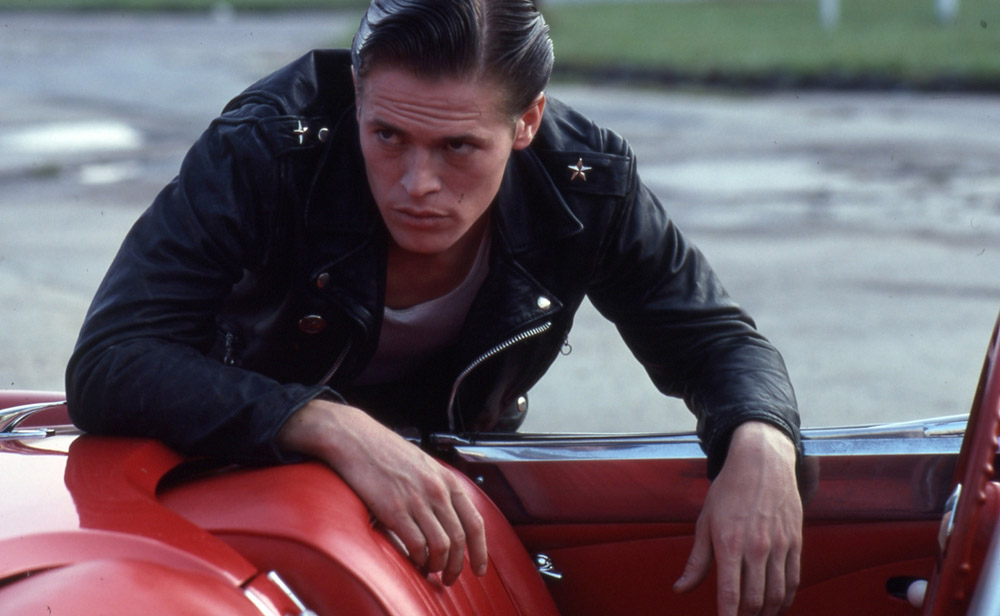
Like much of her work which came after; this debut feature from Kathryn Bigelow focuses on a group of brooding young men on the hunt for a buzz. It follows a gang of bikers who stop for a night in a nowhere town on their way to Daytona. It stars Willem Defoe in his first ever roll and is just as rose tinted, fetishized and homoerotic as the Anger short (see above) which inspired it. 


Before the Devil Knows you’re Dead
Sidney Lumet (2007)

Two brothers get trapped in a downward spiral when a plot to hold up their parents’ jewellery store goes tragically wrong.  For his 46th and final film, the late Sidney Lumet directs the late Phillip Seymour Hoffman for some clever, gloomy viewing; an old-school piece of film making from an old-school film maker.


Stories We Tell
Sarah Polley

She moved us with Away from Her and divided us with Take this Waltz, now actor turned director Sarah Polley brings her most remarkable film to German shores. Using documentary as her toolkit and pivoting her story on interviews with her family and the eloquent, heart wrenching narration of her nurturing dad Mike, Polley sets out to finally determine who her biological father is but instead finds something stranger. A devastating, beautiful film about fatherhood and memory, Stories We Tell picks apart the documentary rulebook before opening a window to that most endearing of bonds.


Tracks
John Curran


Mia Wasikowska gives a windswept, organic central performance in this walkabout film that stays light on its feet while sidestepping many of the pseudo spiritual pitfalls these types of self discovery adaptations tend to take.
She plays Robyn Davidson. An Australian woman who in 1977 set out with her dog Digitty- and four Camels whom she had personally trained- to walk from Alice Springs to  the west coast, a journey of roughly 1,700 miles. She tells us she’s sick of the pessimism of her class, sex and generation. We also learn that she lost her mum. To fund her trip she accepts a deal with the national geographic for a concluding article on her journey and for a photographer (played by rising star Adam Driver) to join her at certain points along the way. He seems to represent everything she’s trying to escape and yet, the two form a bond.
Expressing such raw free spirited emotion on an often populist and, let’s be honest, capitalist medium can prove awfully tricky. Pretention seems to lurk at every corner and yet director John Curran looks to have pulled it off. He keeps things grounded and natural while capturing all of the skin tones, hues and shades which his native outback has to offer. Worth the journey.


A Long Way Down
Pascal Chaumeil

Jesse, Jesse, Jesse… What happened bitch? A mere six months after the Breaking Bad curtain rapturously closed, co-star Aaron Paul finds himself in the cinematic wilderness. His latest subpar outing is a Nick Hornby adaptation (a wandering cinematic beast all its own) which finds four would-be suicides (autopilot Pierce Brosnon, misused Toni Collette, irritating Imogen Poots) on the roof of London’s fictional Toppers House on new year’s eve. The group form a pact to keep themselves intact till Valentine’s Day and worthless schmaltz ensues. Do us all a favour and jump.

2/28/2014


A retired professor and a young female escort spend a Tokyo night and day together in this patient film from celebrated director Abbas Kiarostami. Forever obsessed with people talking in cars, that’s exactly where this film, for the most part, takes place. The high-rise Tokyo backdrop merely acts as a windshield reflection as his characters skim the surface of everyday life. The abrupt conclusion might rub some the wrong way but this remains a crisp, humanist film of near transcendental beauty. 


Upon first viewing of this wide eyed retelling of Walt Disney’s attempt to win the production rights to Mary Poppins one could be forgiven for feeling much like Emma Thompson’s P.L. Travers- eyes set to roll, cynicisms at the ready- but despite its blatant fabrications, the film’s charms, much like those of the studio it portrays, can be difficult to resist.

With flashbacks of her childhood throughout, the story’s main arc follows Travers on her first trip to Los Angeles- financial difficulties having finally forced the author to consider the advances of a determined Walt Disney to bring her beloved character to the big screen. She sees her creation as quite realist fare and so fights her corner on everything from animated penguins to the Sherman brothers’ now iconic songs. Of course we all know the outcome so the fun comes in seeing Tom Hanks’ bumbling Walt trying to woo the cold dame over.

Is the Mouse House attempting to cement Disney into our collective psyche as America’s most beloved leading man instead of the alleged chain smoking anti-Semitic chauvinist of whom we’ve heard? Presumably so. But then again, perhaps such sunshine and fantasy is profoundly fitting. A spoonful of sugar indeed.


Ugetzu Monogatari
Kenji Mizoguchi (1953)

This major classic of Japanese cinema follows a clay pot crafter who makes good off the war and his friend who dreams of becoming a Samurai. Widely regarded as a forerunner for taking Japanese cinema west, Mizoguchi harnesses a dramatic use of shadow, supernatural elements and a generous helping of hubris for his moral tale of honour and indulgence.


Bernie
Richard Linklater (2011)
Jack Black gives a fine performance in this true life tale of a popular Carthage funeral director who kills the wealthy 81 year old widow (played by Shirley MacLaine) who he's been cozying up to. Dotted with interviews from after the fact, Linklater captures all the charms of his native Texans in his morally dense, quaintly funny and gosh darned honest film. Pre McConaissance Matt plays the slimey D.A.

2/25/2014


Arriving less than two months after Nelson Mandela’s death, Mancunian director Justin Chadwick’s thorough biopic is a balanced and fitting eulogy to the revolutionary ANC leader.

Based on Madiba’s autobiography and with a towering Idris Elba at its core, Chadwick’s meaty 141 minute film takes us from a young Mandela’s tribal initiation to his eventual inauguration as president of a new South Africa. The film focuses on both reluctance and resistance. A cocky young barrister at first, it takes a cracked down peaceful protest to get him involved and later, the Soweto massacre for him to take arms. He meets his wife Winnie (A fiery Noamie Harris) along the way and during his incarceration on Robben Island it’s she who takes on the struggle. He’s released 27 years later an old man but Winnie’s mentality remains on the front line. They barely recognise each other.

Such dramatic timing should set the cash registers ringing but this should prove an interesting document for other reasons. Since passing, voices have sounded from all camps as to how Mandela’s legacy should be defined and Chadwick’s film might be the most balanced offering we can hope to see. Elba’s Mandela builds bombs and cheats on his wife; he’s part saint, part sinner, but most remarkably of all, a human being like us.


Keanu Reeves takes a swipe at a comeback with this huge retelling of an 18th century Japanese tale; Kurasawa it most certainly ain’t but as big scale actioners go it’s an awfully pretty one. That said, the thing cost a fortune to make and early reports suggest that gamble might prove a poor one. Celebrating such misfortune can prove a cruddy sort of exercise but then who knows, a backlash might just bring us closer to the day when Keanu puts down the Katana and picks up the surfboard once again. 

2/18/2014


The carpets roll up tonight in Potsdamer Platz after what has been an exhausting but rewarding festival. Previews began on January 8th and since then this knackered writer has seen 66 films from this enormous program. Some good, some bad and some butt ugly. These were the best bits.


Best press Conference: Nymphomaniac: Part I (Uncut)

Few can elicit such press salivation as Lars Von Trier. The grade-A messer was dubbed Persona Non Grata at Cannes for slightly sympathising with Adolf Hitler in the Meloncholia press junket. He hasn’t given one since but showed up in Berlin in a t-shirt emblazoned with the French festival's logo. Still he did not sit for the conference but a fellow headline grabber did. Shia LaBeouf stole the show from the great Dane by sitting in silence, chewing gum in a baseball hat, till the first banal question came his way. His response was to quote Eric Cantona’s Sardines/trawler quip and leave the room.

The director stayed silent but the Von Trier circus was most certainly in town.


Best Line:

“It’s just posh cunts telling thick cunts to kill poor cunts”

-          A Belfast republican gives his glowing review of the British armed forces in surprise favourite 71’.


Top 5 films:


5. The Little House
Yoji Yamada

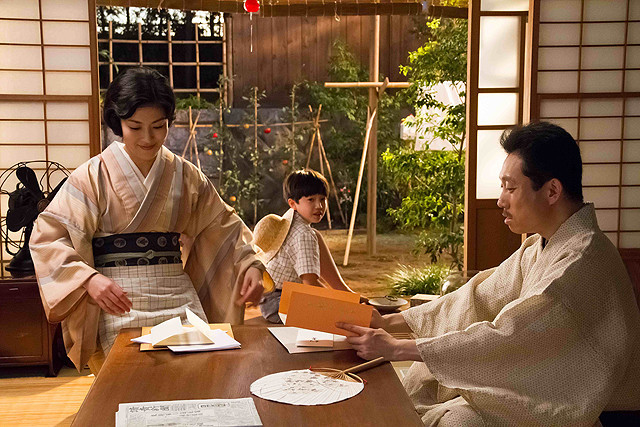
A wonderfully traditional portrait of romance in wartime Japan delivered with the assured delicate touch of its old pro director. It was the last competition film to screen and we welcomed it with open arms.


4. 71’
Yann Demange

From the eyes of a young British soldier, 71’ not only captured the incredible complexity of what was going on in Belfast in the lead up to Bloody Sunday, but also managed to do so without taking sides. We entered the screening with extreme prejudice but soon gave in. A remarkable achievement from first time director Yann Demange and, let’s hope, a springboard lead role for the inexplicably overlooked Jack O’Connell.


3. Nymphomaniac
Lars Von Trier

If Lars Von Trier was put on this earth for the sole purpose of annoying everybody, this could very well be his magnum opus. The feeling of anticipation at the packed house press screening is something only Von Trier could muster. He shows us we’re nothing more than a bunch of degenerates, and we love it.


2. Jack
Edward Berger

There is more than a hint of the Dardenne brothers to Edward Berger’s Jack, but the German director has taken their story out of the council estates and plopped it smack in the narcissistic middle class. The results were fresh and defiantly powerful.


1. The Kidnapping of Michel Houllebecq
Guillaume Nicloux

Michel Houllebecq played himself with nihilistic swagger for this fly on the wall Stockholm syndrome gem. Guillaume Nicloux's film was like a bucket of paint stripper to all the festival's showbiz and nonsense.
It was also very very funny. Simply unmissable. 

2/16/2014


Time plays an important role in the films of Richard Linklater. His debut feature Slacker was built from brief conversations over the course of an Austin Texas day; a tapestry of quick glances which expressed the whole lazy scene. It was fresh, 90's and so very generation X. This format would come to serve Linklater well over the course of his career; Dazed and Confused used it; Waking Life sort of did it too; perhaps his greatest achievement so far took, for now, three such days in three different countries only Linklater let 14 years go by between them.  The results were incredibly moving. The second part of that series, Before Sunrise, hadn't even come out when Linklater began shooting this remarkable film. It’s called Boyhood and shows us through a fictional piece of film, shot roughly one week per year since 2003, the growth of a young boy called Mason (Ellar Coltrane) from the age of 6 to 18.

Gathering Coltrane, his daughter Lorelei and stars Ethan Hawke and Patricia Arquette as their separated parents, Linklater has crafted an entirely unique real-time story of what growing up in Texas must be like. We follow Mason and his sister Samantha as they go to school, their relationship with both parents, Mason’s first girlfriend and job, his mates and interests and everything else, before ultimately leaving for college.
Linklater pulls off an incredible trick in keeping such continuity of tone over such an enormous breath of production. The cuts are subtle and steady, facial hair, fashion and broken voice providing the clues. 

It’s all so impressive and yet somehow so tragically unmoving. When Linklater shoots outside his age bracket, he has a tendency to induce cringe. He made Slacker at 21 and Before Midnight at 52 and both of them worked a treat. Sadly seeing him depict free spirited youths comes off, well, like someone of a certain age depicting free spirited youths. But that only comes when Mason hits his teens, really what disappoints is how the director has failed to get to the guts of the human condition and with all that time and effort that is truly this film's tragedy. Still, Boyhood remains a wonderful, charming piece of work and an astonishingly impressive cinematic achievement. It really has never been done before. It might never be done again.

Well, for another 12 years at least...


2/08/2014


“That’s a whole lotta art” says a number of people on separate occasions in George Clooney’s slightly delayed Monuments Men. His film is about a group of men of a certain age who band together to save Europe’s endangered art. It’s like Wild Hogs except that they’ve apparently ended up at the tail end of the Second World War.

The film concerns a true life plot, which was hatched in 1943, to send a crack team of Art experts to Europe in the hope of tracking down and “liberating” the Nazi’s cultural loot before it was either burnt to ash or fell in the hands of those pesky Russians. George Clooney plays a wily professor who rounds up a team of his art scene buddies to get the job done. It’s a crazy plan but it just might work. Yada yada yada. U-S-A...

The film is almost offensive in its light heartedness; with the sort of gags and score that you’d expect to find on a propaganda film of the 1950s. You get the feeling that if Total Recall truly did exist that The Monuments Men would be some sort of retirement special. Cate Blanchet's performance is graceful as ever but it’s lost amongst her colleagues' whims; stuck on autopilot; nothing more than grown men, having a laugh. But hey, good for them.

A journalist suffered a minor heart attack half way through the press screening.


You can make of that what you will.


Kumiko the Treasure Hunter- the charming new film from brothers David and Nathan Zellner-  hails from a particular strain of American comedy which takes in not only the film's producer, Alexander Payne, but also the Auteur directors that inspire our hero’s search.

We meet Kumiko (Rinko Kikuchi); a melancholic girl in an oversized hoody. Her boss is a prick; her job’s a drag; her colleagues are scarcely better. Kumiko seeks adventure and promptly finds it when she inexplicably unearths a VHS of the Coen brother’s Fargo from a beachside cave and, duped by their opening passage, embroiders a map, nabs the company card and heads to Minnesota to claim the loot.

It’s a sensual film of crispness and sound with Kumiko as a wide eyed Red Riding Hood in a world of her own. We've come to know these things as cautionary tales, but Zellner treats it like a fantasy. At one point she takes a blanket to keep warm; it should be a symbol that things are looking bad, but the director shoots it, instead, like a superhero's cape. 

Much like Bruce Dern's Woody from Payne's recent Nebraska, we know our hero's search is in vain, but these are tragic heroes so we root for them all the same. Both seem desperate for adventure in their lives and share an understanding that making a break from the mundane is never without meaning, even if it is on the back of an empty dream.


2/03/2014


Oh the mountain of must see movies and my humble attempts to scale it...

Progress will be compiled at the end of each month and films are listed in order of preference. 

Monkey Business
Howard Hawkes (1952)
With Cary Grant playing a bumbling scientist whose chimpanzee accidently discovers the elixir of youth, this screwball comedy looks so off the wall it would be fair to assume that particular genre was coined merely to describe it. A young Marilyn Monroe, in a supporting role, offers a great example of her often overlooked comic timing and Grant is his usual brilliant self in the lead role, barking down phones and running amok with endless charm. Grant embodies all the old-school Hollywood heart throb traits, only rivaled perhaps by his mate Jimmy Stewart, but- to paraphrase a better critic than myself- while we love to see him win the girl, when he's slipping on an olive we love him all the more.

Umberto D.
Vittoria De Sica (1952)
4 years after his timeless Bicycle Thieves changed the cinematic landscape, Vittoria De Sica delivered this slightly more sentimental, but still starkly neo-realist effort which follows the trials of the titular Roman pensioner and his beloved dog Flike.  Umberto struggles with social welfare and a cruel landlady as decency seems to fade from the world around him. De Sica’s style looks a touch more decorative here than on previous outings but the director’s dark edge remains, shooting many scenes on the Roman streets and sugar-coating none of his disillusionment with Italian society.

There’s Always Tomorrow
Douglas Sirk (1956)
A decade after their seminal work in Billy Wilder’s peerless noir Double Indemnity, Fred MacMurray and Barbara Stanwyk were reunited here as, respectively, an underappreciated toy manufacturer and the old flame who returns to town. Gushing with all the melancholic longing that a title like that might suggest and with a vintage tender performance from Stanwyk this late Douglas Sirk effort has all the trappings of the melodramist’s best.

You Can Count On Me
Mark Lonergan (2000)

Mark Ruffolo plays a weary looking vagabond who takes a trip home to squeeze some cash from his sister (Laura Linney) but instead ends up playing father figure to her sheltered son (excellent Rory Culkin). Small town America; middle class problems; everyone grows: Lonergan’s film is a clear early omen of what we call the “Sundance film” today and bursting out from that particular festival, it may have even started the trend. 

1/14/2014


A Touch of Sin:
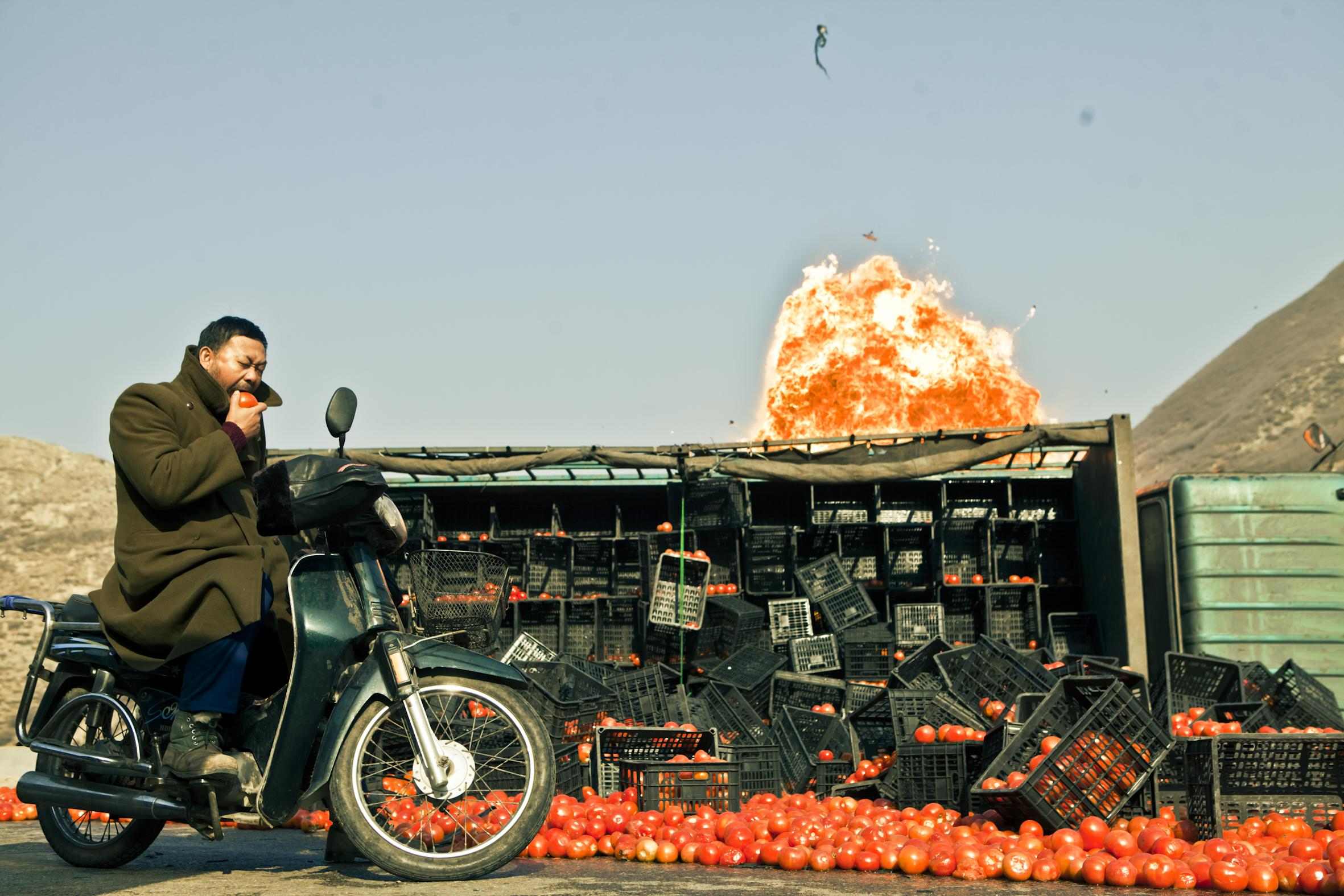
Operating independently of the state run Chinese production company, Still Life director  Zia Zhangke hammers home the mood of anger and disillusionment in Chinese society through the loosely connected stories of a rural man (Jiang), a high end prostitute (Li), a man returning home to the city of Chongqing  and a labourer working a grim production line. They’re all at their wits end and act accordingly. Shot with marvellous scale, A Touch of Sin is violent, blaring with conviction and strikingly subversive.


12 Years a Slave:
Having navigated a mist of eye watering hype, Steve McQueen has emphatically delivered with his long awaited slavery drama. Based on Solomon Northup’s book of the same name, his film is about as marvellous, gruelling and brutal an exercise in cinema as you are likely to see.
We follow Northup’s (Ejiofor) odyssey from respected musician living with wife and children in Saratoga to his kidnapping in Washington and subsequent decent into slavery. We meet his first master, a somewhat decent man named William Ford (Cumberbatch), and then his second, a cruel maniac called Edward Epps (Fassbender). Northup is told constantly to keep his head down and survive but the free man inside strives to “live” again.
So would this British video art director be marginalised by such sweeping moves on Hollywood? It would seem not. Hans Zimmer might know when to kick in the string section but the brutish composer is just a deft with the drill and Sean Bobbitt’s photography has lost none of its poetic hostility. Indeed, McQueen may have his sights on LA but his eyelashes have yet to flutter and with 12 Years he shows us the fear and hatred which governed these peoples’ lives in a way few American film makers have been able to muster.


Unknown Pleasures Festival:
Oscar hopefuls and kickstarter darlings will once again be rubbing elbows for this year’s Unknown Pleasures fest as the American independent showcase with the Mancunian album name reaches its sixth year. Opening night hosts the Berlin premiere of James Gray’s sepia drenched Ellis Island fable The Immigrant; concerning a Polish woman, delicately played by Marion Cotillard, who is forced into prostitution upon arrival in New York. Gray’s film premiered at Cannes last May alongside one of this year’s more light-hearted offerings, Alexander Payne’s Nebraska, in which Bruce Dern offers a fine reminder of his talents as an ailing man on a cross state mission to cash in a dubious sweepstakes letter. Robert Redford gives a similarly late flourish as he faces the elements on board a doomed sailboat in J.C. Chandor’s one man show All Is Lost. Redford’s Sundance film festival is represented here of course with two of last year’s best received films: I used to be Darker is Matthew Porterfields story of an Irish runaway and the crumbling Baltimore relatives with whom she takes refuge and Brie Larson stars as a foster care worker in Destin Daniel Crettin’s Short term 12. This year’s Special Program will focus on socialist documentary maker Travis Wilkerson- including An Injury to One; his study of Frank Little, a union agitator who was lynched by the capitalist leaders of Butte Montana. A town whose factories provided 10% of the world’s copper – as well as a number of restored films including Thom Andersen’s Los Angeles Plays Itself, a video essay on the city of Angels comprised entirely of clips from the movies. Sounds swell.


Twitter Facebook Dribbble Tumblr Last FM Flickr Behance