Showing posts with label Jonathon Glazer. Show all posts

1/05/2015


So another fine year for cinema draws to a close. Through the newly released and the oldies revisited, festival marathons and lazy sundays in, I've watched something in the region of 250 films this year. The process of narrowing that down to a measely 10 is surely a futile insulting process and yet here we are, wahey! Of course, this is nothing definitive, merely the plucky few who stood out from the pack. 

Despite my best efforts, especially in these last few weeks, there are still plenty of supposedly notable films which I've missed. This shameful roll call includes: The Imitation GameOculus, Love is StrangeThe Wind RisesThe Tale of Princess Kaguya, The LunchboxThe Missing PictureProxyHide Your Smiling FacesCold in JulyIlo Ilo, and- perhaps to this list's greatest determinant- the documentary Manakanama and Lukas Moodysson's We Are the Best! All of these, and surely many more, could well be masterpieces. There are also questions of international release dates and advanced festival viewing but not to worry, from the big ones that kicked me straight in the gut to the little ones that have lingered on. this is just what hit home for me in 2014.

Keen eyed readers might also note one glaring, boy-shaped exclusion. Richard Linklater's latest swept me away as a cinematic achievement, but the story of Mason's last twelve years on earth just hasn't stuck with me since I saw it at the Berlinale ten months ago. In all honesty, even at the time, the last few years failed to register at all. My suspicions are that Boyhood hits home with parents much more so than with me so, with that in mind, I, Rory O'Conner, hereby state that I will watch and review Linklater's Boyhood once again when my first child turns 18. Stay tuned for that one folks, I expect to see something new.


Sorry Fellas...
10 honourable mentions, in no particular order:

Nightcrawler: A reliably dedicated Jake Gyllenhall stalks the L.A. streets as a sociopathic first-on-the-scene crime reporter. Dan Gilroy channels Paul Schrader and Brian DePalma for a startling debut. Master cinematographer Robert Elswit's lens has seldom been more seedy.
Edge of Tomorrow: By playing around with the endless possibilities of a video game reset button, Doug limon's clever little Sci-Fi became the blockbuster surprise package of the summer.
Starred UpThe finest moment of Jack O'Connel's breakout year, he played new-kid-on-the-cellblock son to Ben Mendelsohn's worrying, institutionalised dad. This solid, hard edged prison drama was elevated to new heights by its standout leads. 
The Babadook: A frightening directorial debut. Jennifer Kent used familiar horror set ups and children's fables to show how loss, motherhood and mourning can take their psychological toll.
The Grand Budapest Hotel: With career best performances from Saoirse Ronan and Ralph Feinnes and a blistering score from Alexandre Desplat, Wes Anderson delivered his finest work in 15 years.
Two Days One Night: Gunning for a 3rd Palme d'Or which wasn't to be, the Dardenne brothers cranked their empathy machine up a few gears. Marion Cotillard was brittle and brilliant in the lead role.
Night Moves: Kelly Reichardt swung her career to the extreme left with this strangely overlooked study of the moral complexities and hubris involved with eco terrorism. Confirmed the director is still, surely, one of the most interesting filmmakers around.
The Kidnapping of Michel Houllebecq: Wit the IMPAC winning author playing himself with nihilistic swagger, Guillaume Nicloux's Stockholm Syndrome pseudo-doc took a bucket of paint stripper to all the Berlinale razzle dazzle this year. It was also very very funny.
Blue Ruin: Another from a strong list of breakout directors, Jeremy Saulnier showed a virtuoso hand for cinematic imagery with his largely dialogue free revenge thriller. Shades of the great Peter Lorre can be seen in Macon Blair's edgy shivering Dwight.
The Guest: Mischievous, perfectly toned and full of neat cinematic ideas, the year's best genre effort was- almost- 2014's best laugh too.


10.
Foxcatcher

Beautifully framed, weighted photography from Greig Fraser; balletic, near silent wrestling scenes; and career best performances from its three leads. Bennet Miller's third feature was a work of both staggering quality and remarkable restraint.

Full Cannes review here.


9.
Nymphomaniac Part I & II (UNCUT)

With separate screenings in Berlin and Venice- which featured, among other off-screen things, a Cantona-quoting Shia Lebeouf walk-out, a Persona Non Grata middle finger to Cannes and a phone-a-friend Skype call between Stellan Skarsgard and director Lars Von Trier- this meaty, ornately detailed, 325 minute long unsexy film about sex provided further confirmation of the fun that can be had when the Lars show comes to town. 


8.
A Pigeon Sat on a Branch Reflecting on Existence

Bubbling beneath his blend of absurd tragic homor and colonial guilt, Roy Andersson found a defiant warmth for our sad old race. His trilogy ending masterpiece deservedly nabbed him Venice's Gold Lion too.

Full Venice review here.


7.
The Lego Movie


What a joy it would have been to have attended the first screening of this hilarious, anarchic riot. Not only did writer-directors Phil Lord and Chris Miller debunk our (justifiably) cynical expectations, they seemed to take our worst fears about The LEGO movie- unimaginative, money grabbing Hollywood fodder- and turn them on their head. The film not only preached lovely things like nonconformity and play, it was also the most fun to be had in the cinema this year. Arguably the best received film of 2014, it currently sits with 96% on Rotten Tomatoes from a whopping 221 reviews. But when one Fox NEWS reporter denounced it as anti-capitalist, there was little else we really needed to hear.


6.

Under the Skin

Scarlett Johansson drove around Glasgow in a minivan and lured a few Scottish blokes into a pool of black goo. Director Jonathan Glazer added maverick hidden camera work to his already peerless imagery to create the year's strangest, most singular film. Mica Levi's score- a regular in its own right on any reputable year-end music list- brought haunting levels of depth. 

Scarlett was quite brilliant. 

Had the ending been up to it, Under the Skin would have surely been my number 1. It was ten years in the making, let's pray we don't wait so long for his next. 


5.
Citizenfour

Had they shot it in Hollywood we might have seen a long table littered with empty Chinese take-out and head scratching journos in loosened ties, but Laura Poitras' earth shattering documentary had little need for such cheap aesthetics. The stakes felt so urgent, the social responsibility so huge, it was like sitting at the source of the Nile as the frightening information leaked out. Once in a generation stuff.


4.
Whiplash

It's difficult to express in words what a driving, breathless experience Damien Cazalle's debut feature really is, but I suppose that's what I'm here to do. With breakneck editing, toxic dialogue and, from J.K. Simmons, the performance of the year, Whiplash seemed liable to burst from its snare-skin tight seams. The armrest gripping final showdown provided the year's best scene.

My adrenaline fuelled Cannes review here.


3. 

Interstellar

Amidst the cash cows and cynicism of blockbuster filmmaking, Christopher Nolan wasn't afraid to wear his heart on his sleeve. Interstellar was as wonderfully ambitious as it was fundamentally flawed, and yet, to put it simply, a trip to the Cinema hadn't felt like that in years.

I laughed. I cried. I wiped my jaw off the floor. 

An argument for its greatness here.


2. 

La Meraviglie (The Wonders)

As Johnathon Glazer sent an Alien to Scotland and Christopher Nolan shot a man to the stars, Italian director Alice Rohrwacher chose to turn her lens to a small beekeeping farm in Tuscany. Delicate period details, warm, heartbreaking humanity and surrealist flourishes like something from a Herzog dream. A wonderfully personal piece of filmmaking, nothing this year felt so textured and real.

Full gushing Cannes review here.


1. 

Her

You could really talk for hours about the amount of hand crafted care and detail that was put into each inch of Spike Jonze's fourth film, even without mentioning the terrific cast, Hoyte Van Hoytema's crisp cinematography or Owen Pallet and Arcade Fire's rousing score. But that would be forgetting the simplicity of the film's neat core idea. Great science fiction is all about neat little ideas, and while a human falling for an artificial intelligence operating system might not be the most original of stories, Scarlett Johansson's Samantha falling out of love is.

With relatively scarce use of CGI, Spike Jonze and his wonderful production team crafted a vivid, thoughtful view of what our future might actually feel like, both the world which surrounds us and the increasingly integrated one on our screens. The results, of course, were marvellous, but they also managed to capture how a self aware O.S. might really feel. To that point that in a fine, resurgent year for science fiction, the being we empathised with most was made up of merely a silky voice and a computer screen. 

A touching, beautiful triumph, and one which almost reached the haunting levels of Roy Batty and those things he's seen...
It's like I'm reading a book... and it's a book I deeply love. But I'm reading it slowly now. So the words are really far apart and the spaces between the words are almost infinite. I can still feel you... and the words of our story... but it's in this endless space between the words that I'm finding myself now. It's a place that's not of the physical world. It's where everything else is that I didn't even know existed.
Philip K. Dick would be proud.

Much peace and love for 2015 xxx

1/01/2015


Tokyo, Autumn, 2003. Magic hour lighting, florescent adverts. Fuzzy Guitar. Kevin Shields. A young American rides an escalator; takes a train; discovers some shrines. Despite the over-privileged POV, Sofia Coppola's devastating Lost in Translation seemed to capture a mood for so many people at the beginning of the 21st century. One of uncertainty, of searching for something private, for authenticity, in an increasingly dense and overly connected world. Coppola certainly had her finger on the pulse of generation Y but it was her distant leading lady who seemed to embody the whole thing. It was the role which made Scarlet Johannson famous, but it also showed us the distant look which would make her a star.

It's a look which seems to take the torch from Hollywood's passing old guard. Indeed, Coppola has stated that she based her and Bill Murray's on-screen relationship with that of Bogey and the recently deceased Lauren Becall. The late, great actress famously admitted that "The Look"- so gleefully coined by Warner Bros' ad men- came as a result of holding her chin down to her chest to stop her incessant shaking until right before the cameras rolled. Her's was a look of world-weary defiance for a genre synonymous with shadows and betrayal,  but Scarlet's is nothing like it. Her's is curious, a look which attempts to digest what the world's throwing at her, trying to find some simple beauty, perhaps, in all the chaos and information of 21st century life. 

A great deal has happened since those fluorescent Tokyo nights. Scarlet's become, arguably, the great star of her generation; an old-school curvy bombshell in an era obsessed with size. Those looks have taken her to the murky waters of FHM’s Sexiest Women and, arguably, the the even murkier waters of Woody Allen’s Muse. She nabbed roles with drooling directors like Brian DePalma and Michael Bay and donned the slinky leather suits of Marvel's Avengers project too. For better or probably worse- this is Hollywood after all- the actress' beauty has become her defining characteristic, and it looked as if her once promising career was on the slide. And yet, over the last 12 months three brilliant, very different directors- from Maryland, Paris and London- saw something else. Something different, it would seem, than anyone had before.


Her, Lucy and Under the Skin appear to pluck on differing strings of the Science Fiction genre and yet all three are connected by a core idea. Scarlet's three characters- an infinitely expanding Operating System, a human being realizing her full mental capacity and a sexually predatorial Alien who lures men into a pool of goo- might not sound like comparable entities, and yet these three directors used them to ponder the same thing: If an unfamiliar, vaster intelligence were to take a good look at our home would it see the beauty of it or the horror? Would it find complexity or insignificance? 

Leaving talk of the dreaded Male Gaze asside for a moment, what is it in those eyes and lips, that skin, that voice which caught the attention of Spike Jonze, Luc Besson and Jonathon Glazer? And what about Sofia Coppola too, when she sent her out- all wide eyed, existential and 19 years old- through the subways and shrines of the Japanese capitol. We marvel at Scarlet, she marvels a things. 

The fundamental idea Sofia Coppola had in 2003 is not so different to the one Jonze, Besson and Glazer have had over the course of the past year, it's just the stories, the worlds and characters that have gone supernova.

But so has she.


12/31/2014

So what did it really feel like to go to the flicks in 2014?

A master Scandinavian absurdist took the gold Lion in Venice while, back in February, a similarly metalled Bear took an unexpected trip from Berlin to China. Boyhood was the bookies favourite for that particular gong, and it now looks odds on for Oscar glory too, but if March 2015 turns out to be the story of Linklater's 12 Year's a Boy, this year's razzle dazzle was all Steve McQueen and his 12 Years a Slave. Indeed, while somewhat unexpected turns were taken elsewere, the BIG, "important"- and truly quite brilliant- American thing still won the Academy Award while out on the French coast, the long, difficult European thing (Nuri Bilge Ceylan's Winter Sleep) still won the Palme d'Or.

It was a year when the dream factory churned out the sequels, remakes and prequels at an oddly interim level as the green beads of sweat began to form for its endlessly lucrative 2015. And yet despite all that talk of Justice leagues, expanded universes and Michael Bay, the real story of the multiplexes came, quite bizarrely, from the left of field. Guardians of the Galaxy (Decent), 22 Jump Street (Good) and The LEGO Movie (Great) let Hollywood show us that it was in on the joke, but a Tom Cruise Sci-fi styled Groundhog Day and a stupid-smart thrill ride from Luc Besson offered even greater escape than these. For the most part though it all seemed quite familiar and, far too often, tediously self aware. But then, like a great big gravitational shift, along came Christopher Nolan, Hans Zimmer and their mighty Interstellar to pummel us into our seats. To paraphrase the great David Thomson, cinema simply says: Look at this, isn't it amazing? Isn't it beautiful? Nothing else this year seemed to ask these questions so loud (and I mean LOUD) and clear.
It was a year when reality often offered more urgency and thrills than fiction. Documentary land introduced us to the defiant nationalism of Viacheslav Fetisov, the courage and charm of the American Samoan football team, the staggering integrity of Edward Snowden and what lies behind the curtain of Johannes Vermeer. Great twists were taken in Wes Anderson and Kelly Reichhardt's careers while It Felt Like Love, The Guest, Blue Ruin, Nightcrawler and Coherence proved that there's still fresh blood in American indie too. In other lands a young Polish woman named Ida listened to John Coltrane; a Russian man named Nikolay experienced the book of job; but then a rumble rumble rumble and a dook dook dook for something or other called the BabadookWe reeled with David Cronenberg and rallied with the Dardennes before Alice Rohrwacher, and her quiet Tuscan farm, gently let us reminisce on childhood and life. 

It was a year of North Korean hacking and Nymphomania; of Foxcatcher Farms and Budapest Hotels. Edward Snowden broke rank; Spike Jonze broke hearts; Jack O'Connell broke heads; Miles Teller broke sticks. Jonze, Besson and Glazer helped Scarjo rise from the ashes while Phillip Seymour Hoffman, Robin Williams and Lauren Becall tragically returned to theirs...

So another year of the unexpected and the business-as-usual. And yet, like a fool, what struck me more than anything was just 8 quick shots and 90 seconds long. A scurrying little droid, a dessert plain, and the greatest opening chord in cinema history. 

Happy New year y'all, and thanks for all the reads. x 

2015 is coming, those twin suns loom...


5/07/2014


Birth
Jonathan Glazer (1994)

Jonathan Glazer followed up his pulsating London gangland debut with this strange, floating, singular film about a woman who loses her husband before believing he's returned in the body of a ten year old child. 

Birth was marred by controversy upon its release, largely due to a daring bathtub scene featuring Nicole Kidman and her very underage co-star Cameron Bright. Ten years on that sequence still holds an eerie quality but it's in no way out of whack with Glazer's film as a whole.

Kidman offers the performance of a lifetime and Bright plays it just as startling by her side. Glazer's imagery, of course, is never in question but he hones those Kubrickian leanings with a remarkable sense of patience and a clear deftness of touch. The plot line seems to boarder on urban mythology at times but the director manages to keep it tantalizingly in check, knowing exactly when to hold firm on reality and knowing exactly when to let go.

The results are just devastating. A forgotten mystery about love and loss which soars across the screen on Alexandre Desplat's breathtaking, counterpointed chords, never allowing you to catch a grip but always letting you think that you can. Birth still sits with 39% on Rotten Tomatoes but, with the celebrated release of Under the Skin this year; people are beginning to take another look. That’s exactly what this writer did and, if you haven’t already, perhaps you should too. 

If the opening minutes don't catch your eye it might be time to find a new hobby.


The Last Temptation of Christ
Martin Scorsese (1988)

Willem Defoe is Christ but not quite as we know it. He gets pinned up to the cross (after about two hours viewing) but before he goes off to kick the proverbial bucket, the Devil shows up to take him on one last lap of temptation 

Although far from outright sensationalism, many a feather was still ruffled when Martin Scorsese brought his radical take on the Crucifixion to the big screen. Perhaps it's a shame, you do get the feeling the catholic raised director was just trying to get a humanist grasp on the man he was brought up to worship but hey, try telling that to the group who Molotov Cocktailed a Parisian cinema upon the film's release.

Indeed, many other crimes were recorded. Harvey Keitel’s performance and haircut were just some of them.


Stoker
Park Chan Wook (1988)

Oldboy director Park Chan Wook made his English language debut last year with this super stylised incestuous thriller in which the wife and daughter of a recently deceased Doctor are visited and seduced by his prodigal brother.


The film is quite heavy on visual innuendo and a great deal of Wook’s style seems a touch lost in translation but Stoker is still a solid piece of work. Strangely, Nicole Kidman plays a wealthy widow for the second time in this very list- and Harmony Korine inexplicably pops up as an Art teacher for about 5 seconds- but the dazzling Mia Wasikowska- who confirmed her ethereal screen presence here after her Alice in Wonderland breakout- is the lightest of anchors in the lead role.


4/02/2014


Ashes and Diamonds
Andrjez Wadja (1958)

On the final day of WWII a Warsaw Pole who fought in the uprising is tasked with killing a minister of the newly formed government. He's no stranger to the job but confusion and anger have begun to sink in so he has some drinks, meets a girl and mulls it over, while the party heads clink glasses in the next room. As Poland hits a political crossroads we find an everyman patriot facing an existential crisis. 

Andrjez Wadja directs it with all the beauty and skill of Hollywood's golden age; there's a slick brooding lead and, naturally, a beautiful girl too but there's a world-weariness and humour here which feel so distinctly Polish. Wadja learned his craft at the Lodz film school- believed by many then and now to be the finest institution of its kind- and graduated more than a decade before America's so called “film school generation” got up and running. Interestingly both Scorsese and Coppola, arguably that group’s most lauded members, ranked Ashes and Diamonds amongst their favourites for Sight and Sound's widely renowned canon last year and it's not so difficult to see why. It’s a stunning, moral piece of work which seems, at once, to  sum up all the disillusionment of its time before asking the defining question, what really remains when war has run its awful course: Devastation or triumph; Ashes or diamonds.


Sexy Beast
Jonathon Glazer (2000)


Ray Winston plays a retired mob guy winding down with his wife and two pals in sunny Spain. A rogue boulder skims his head early on and crashes into the tiled love hearts on the floor of his pool. It proves, of course, to be a bad omen. A mad ex-colleague (Ben Kingsley) then arrives on the scene, ready to blow, determined to pull the ex con back into the game for one last job, a safety deposit heist back home.

A year before the film’s release, its director, Jonathon Glazer had swept the advertising awards with his thumping Leftfield driven Surfer advert for Guinness. For this, his first feature, he managed to transfer that roaring intensity to the big screen. Roque Banos’ score seems to channel that leftfield track and Ivan Bird provides a stunning portfolio of maverick, weightless camera work. The results seem to ooze all the style and confidence you might expect from a renowned ad man but Glazer keeps the blood flowing by drawing two quite remarkable performances from his leading men. Winston is rock solid as the affable geezer and Ben Kingsley, chiefly known at the time for  playing a legendary pacifist, is a frightening time bomb in the supporting role. His short-fused; straight-backed Don Logan is an all consuming, suffocating presence which would come to shower the actor in awards and change his cinematic image for good.


The Cook, the Thief, His Wife and Her Lover
Peter Greenaway (1989)

Michael Gambon goes off on a mad one as a wealthy philistine restaurateur in this chambered circus of vulgarity from director Peter Greenaway. He plays the titular thief; Helen Mirren his titular wife. It all pans out in his cavernous new restaurant where he wines and dines his cronies while an intellectual client seduces his spouse. Gambon’s endless pile of charlatan quips and Mirren’s inherent sexuality combine well with the richness of Greenaway’s design for this absurdity infused EntrĂ©e of Thatcherite excess. Marvel at Jean Paul Gaultier's lavish costumes, Ben Van Oats' decadent production design and Michael Nyman's delicate score. Bon Appetite.


The Apple
Samira Makhmalbaf (1998)

The debut film of this Iranian New Waver tells the story of an old man and his blind wife who kept their two children at home until they were 11 years old. The father’s poor and fears the girls will be shamed if left alone but then the two break out and go exploring. In the renowned new wave fashion Makhmalbaf allows the real life people involved to play themselves. It's bittersweet and dignified. It's about kids and community. It's very Makhmalbaf. Very Iranian New Wave.


Scorpio Rising
Kenneth Anger (1964)     
   
The most well known of this experimental filmmaker’s shorts is a rapid-fire collage of motorcycle fetish, homoeroticism and idol worship. Massively influential, Anger’s strange use of rock and roll would inspire Martin Scorsese, David Lynch and countless others that followed.


The Loveless
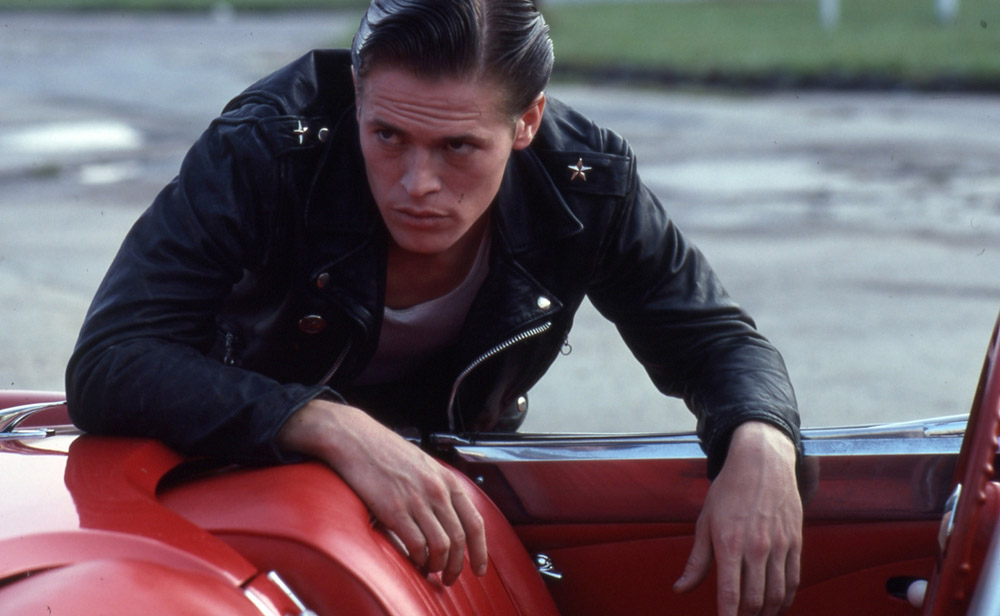
Kathryn Bigelow (1982)


Like much of her work which came after; this debut feature from Kathryn Bigelow focuses on a group of brooding young men on the hunt for a buzz. It follows a gang of bikers who stop for a night in a nowhere town on their way to Daytona. It stars Willem Defoe in his first ever roll and is just as rose tinted, fetishized and homoerotic as the Anger short (see above) which inspired it. 


Before the Devil Knows you’re Dead
Sidney Lumet (2007)

Two brothers get trapped in a downward spiral when a plot to hold up their parents’ jewellery store goes tragically wrong.  For his 46th and final film, the late Sidney Lumet directs the late Phillip Seymour Hoffman for some clever, gloomy viewing; an old-school piece of film making from an old-school film maker.

 
Twitter Facebook Dribbble Tumblr Last FM Flickr Behance