Showing posts with label Cannes. Show all posts

5/24/2014


The Nespressos are going cold, the Pellegrino's gone flat and the culinary puns are running increasingly dry as we reach the end of the 67th Cannes Film Festival. On paper it might have lacked the same oomph as last year's big name ballot but the selection this year has still left us thrilled and serene. It's been a competition which had a lot to say about money but which still found space for more organic fare, not to mention a 3D head scratcher from one Jean Luc Godard. So with the Palme d'Or ceremony just hours away lets attempt a quick punt at what should/could/will win and of course, far more importantly, our very own top 5.

Le Top 5


Honourable mention: Leviathan

Had we a touch more time to digest it, this marvelously crafted take on the book of job would most certainly have crept up the list. Strange, staggering and often darkly funny, Andrei Zvyagintsev (good luck with that) threw a late spanner in the works for most critics, and just maybe for the Jury too...
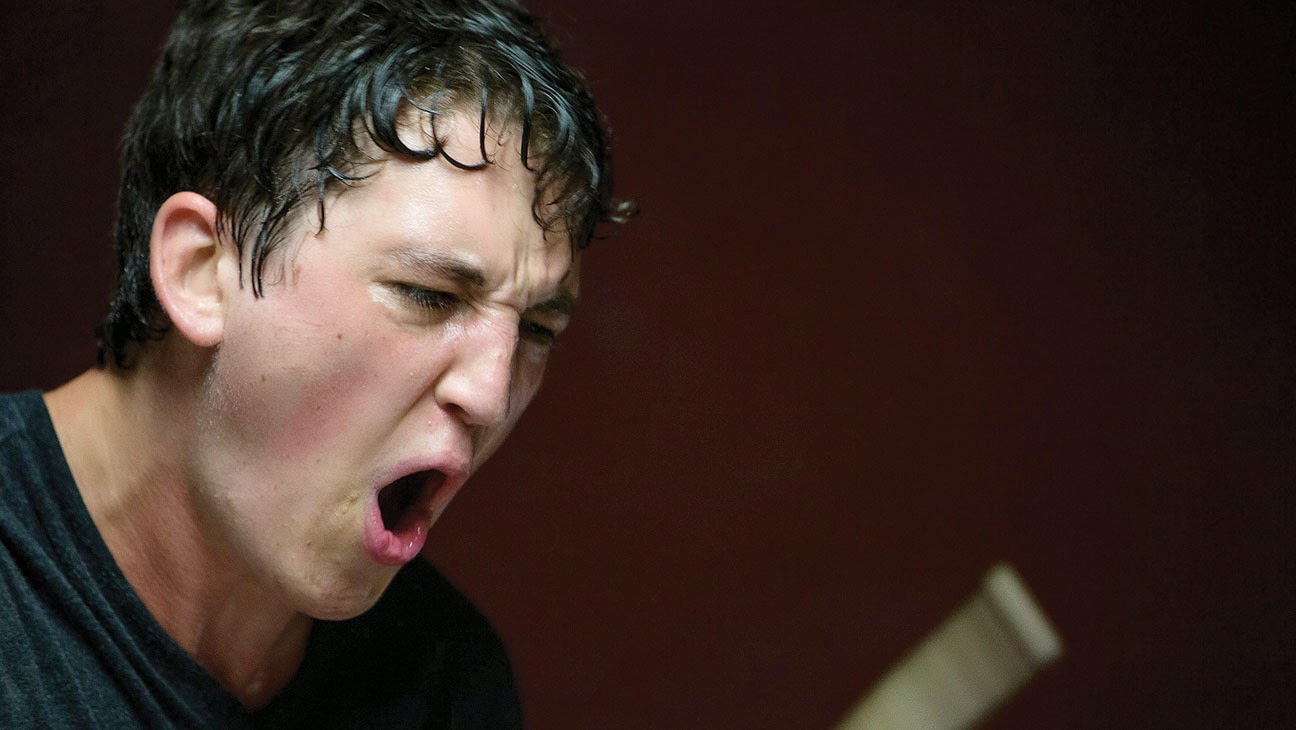


5. Whiplash

J.K. Simmons and Miles Teller go to war in a university jazz band for Damien Chazelle's Sundance conquering debut. The film is explosive. The ovation was too. A full review here.


4. Two Days, One Night

The Dardennes delivered a wonderfully tight story of a woman who is given a week to canvas her colleagues to ask they forego their bonuses so that she can keep her job. The brothers from Belgium are already two times winners here and while we doubt we'll be seeing a third for now, Marion Cotillard is surely a lock for her shrunken, brave lead role. Full review here.


3. Red Army

Gabe Polsky's defiantly nationalist documentary on the Soviet Union's Red Army hockey team might just be one of the most rousing, impassioned sport films to ever hit the screen. Polsky (a player himself of Russian descent) understands the politics of his subject but, far more importantly, the great beauty of their play too. The funny and charming maverick Vyacheslav Fetisov, the film's main focus, has a comet named after him. What more do you need to hear?


2. Foxcatcher

Bennet Miller not only made it three in row with his bleak, brilliant Foxcatcher but, with that great eye for the affluent American psyche, managed to improve on everything too. We expect awards tonight and many more come February. Full review here.


1. The Wonders

Oh the incomparable pleasure of the festival unknown. This writer entered the Salle Debussy with no knowledge of director Alice Rohrwacher, nor expectations of what her new film would bring, but left feeling transcendental and just plain old alive. An unexpected and devastating delight. Full-blooded, gushing review here.


L'Awards


Palme d'Or

Will: A near impossible call but twenty five year old Xavier Dolan's Mommy might just be ballsy enough to stand out from the crowd.

Should: The Wonders. Try and keep up.

Could: Anything from Mr. Turner, Leviathan, Foxcatcher or Winters Sleep

Grand Prix

Will: Mr. Turner

Should: Foxcatcher. Again, keep up.

Best Actor

Will: Steve Carell (Foxcatcher)

Should: Steve Carell (Foxcatcher)

Best Actress

Will: Marion Cotillard (Two Days, One Night)

Should: Marion Cotillard (Two Days, One Night)

L'Epilogue


Phew, well that's all folks. Off to skull a few overpriced domestic beers before the award show begins. Fingers will be crossed for Alice Rohrwacher (not to mention Athletico Madrid). Apologies for saturated news feeds and, as ever, thanks for tuning in. 


Alice Rohrwacher's second feature film is a semi biographical account of growing up in rural Tuscany told mainly through the eyes of a family's eldest child. It's simple in its set up; dreamlike in delivery; and transcendental in its beauty.

We meet Gelsomina. A 12 year old girl just getting to grips with life as she helps around on the family farm. The film focuses on, although not exclusively, her relationship with her father, her mother and her eldest sister. She has no brothers and so her hermetic father Wolfgang is determined to see her take over the family's lot. He's a bit of a brute but seems decent deep down. They take in a young German lad called Martin with some sort of juvenile record. Martin and Gelsomina can't speak a word to each other but there's no doubting young love's on the cards. One day out swimming the girls happen upon a Felliniesque looking TV shoot with Monica Bellucci as its Dolce Vita. The station are shooting an advert for an upcoming competition of local wonders and since Gelsomina has a particular knack for keeping bees, she decides to throw in. 

Director Alice Rohrwacher grew up in rural Tuscany to a beekeeping father so we can presume the film to be biographical, to some extent at least. Whatever the case though that familiarity shows. She paints such a perfect portrait of rural Europe in the early 90's that you genuinely believe you are looking at a family which is vividly real. Rohrwacher draws marvelous performances from both of her young leads, who bring shyness, natural humour and charm in spades. Their pastel leggings and baggy jumpers feel heavy with authenticity too and Hélène Louvart's 16mm photography is near flawless in its execution. Indeed, as anyone who grew up in the 90's can attest, not a single frame would look out of place in any scrapbook of that time. 


As the minutes float by, you get a real sense that the director has put her heart and soul up there on screen. The picture seems to ache with the pains of being that age. Gelsomina feels ready to shift more into adulthood but her father struggles to accept that she's no longer a child. The imagery flourishes with innocence and youth- the magic of a beam of light, the weight of a pile of spilled honey- but also writhes with growing pains too. Gelsomina and her closest sister often bond over their favourite song, but when it comes on the radio- with Martin in the room- she lashes out at her in shame. The young girl is devastated; a sting of rejection we all shudder to know.

The titular Wonders of this stunning film are of the competition Gelsomina enters but, of course, this is a film seeped in the wonders of growing up too. The girls look at Monica Belushi's TV presenter as if she were some rare bird of paradise, like nothing they've ever seen. A TV shoot in a cave might have been picked from one of Werner Herzog's more vibrant dreams. With all the struggles that come with film festivals- the cost, the lackluster films, the sardine tin squeeze- these occasions can be jading to even the most wide eyed and earnest of viewers. You can find yourself drained at times but then, right when you least expect it, something comes along and gets right underneath your skin; blows away the cobwebs; and, if it's really really good, gives a moment of clarity to all that overwhelming chaos of life. 

The packed out Salle Debussy relegated me to a seat on the balcony's extreme left, a tower of speakers blocking off 10% of the left of screen, but it didn't matter. I will be astonished to see a better film at this year's Cannes film festival or beyond that even for 2014. With weighted austere fare like Mr. Turner and Winter Sleep in the mix, prizes might prove hard to come by, but with Jane Campion heading the jury, Ms Rohrwacher might just be in luck. 

Whatever the case, as thing's stand we'll be routing for her this evening. Truly life affirming stuff.

5/22/2014


As the Cannes film festival begins to wind down we happen upon- reportedly- Ken Loach's final narrative feature. Jimmy's Hall is a quaint sort of outing- and the acting at times can let it down- but as an impassioned, well researched and idealistic study, it’s up there with the director's best.

The plot follows the true life story of Jimmy Gralton, a socialist from Leitrim who moved to the States after the civil war only to return ten years later to his local town. At the bequest of his neighbours he decides to rebuild the village’s community centre; the Pearce & Connolly Hall. Jimmy reinstates painting, literature and singing classes along with nights of Jazz music (god forbid!) with the records he brought home. The hall seems to light the whole town up but, of course, falls foul of the local establishment. The priest (Jim Norton in full bishop Brennan mode) is first to denounce him as a communist before the blueshirts follow suit.


Loach hones in on a very delicate moment in Irish politics here, a crossroads of sorts between the war of Independence’s conclusion and the beginning of the troubles in the North. Similar to the post war years in Britain; a subject which has always been close to the director’s heart, his argument is of a missed opportunity for a socialist Ireland. The detail in clothing and the Offaly landscape are all presented beautifully through Robbie Ryan’s gorgeous photography but a sense of realism is hard to get a hold of and, regrettably, that's due to the surprisingly poor cast. It’s not a criticism you would normally level at Loach, the director often works wonders with nonprofessional actors, but here it really can’t be denied. The lines come out a bit too clunky, the speeches a touch too brash. This isn’t to say the film doesn’t work as such- it's still a fine, thoughtful, impassioned piece of work- but the flaws are still apparent.

A sure sense of pride was still on offer for any Irish attendees in the packed out Salle Lumiere. Dotted cheers could be heard for the Irish Film Board logo, as were belly laughs for some of the more colloquial lines, but all in all the response was warm. The film was met with a rousing applause and a good round of clapping-along could be heard as the credits' music rolled.


The director has been here a record 13 times before and if rumours are to be true this could very well be his last. He hasn't exactly ended on a classic per se but Jimmy’s Hall is still a pleasant end to the affair.

5/21/2014


Right, lets attempt to sum up this brilliant film with as few music cliches as possible.

Damien Chazalle's exhilarating; Sundance conquering Whiplash tells the story of a music college showdown between a determined young jazz drummer and the sociopath conductor of the school's prestigious ensemble band. The film is 105 minutes long.

It feels like 10.

Miles Teller plays compulsively ambitious drummer Andrew Neyman, a first year student at a high end music university in New York. He is handpicked by the school's ruthless, perfectionist ensemble conductor Terrence Fletcher (J.K. Simmons, all guns blazing) to be the alternate drummer in his band. This is all set up incredibly fast and the film plays out from here largely as one great big staring contest of the nerves. Fletcher susses his student out immediately; an only child from an unmusical family, gifted but naive about being a great; and proceeds to lift his little finger and duly wrap the boy around it. Neyman is desperate to please this new father figure; show the folks back home that they were all wrong; and fulfill the destiny he himself has laid out. To get where he wants to be he's willing to throw his girlfriend, his relationships and his own general well being under the proverbial bus- or truck as the case may be.


All of these subplots are of little consequence though, the film plays out mainly as a battle between its two remarkable leads. J.K. Simmons looks like his life has been leading up to the moment, a magnanimous muscular presence with all the best lines too. Miles Teller isn't playing against type necessarily but he gets to do a lot more than wave his usual charming shtick (although thankfully a peripheral love interest allows him to do a bit of that too). 

The director- no surprises a jazz drummer himself- conducts their showdown scenes with great big brash strokes; all nerve racking intensity and high tempo (300 words, had to happen) rat-a-tat editing. You can just feel yourself being pummeled into the seat, teeth clenched, desperate for a release. The final twenty minutes are some of the most intense this writer has ever seen and if the finale was deafening, the applause which followed in the Theater Croisette was even more so. People jumped from their seats to a standing ovation which lasted the entirety of the credits and beyond. It was like we'd all won promotion to the Premier league, a truly rousing festival moment, one I hope never to forget.

I shook the director's hand on the way out. It was trembling more than mine.


5/20/2014


On the fifth day of this year's Cannes film festival we find a bright young director using a clever horror concept to explore the sexual politics of a group of American teens. 

A camera pans in and we're off the blocks. We're in suburbia and the early Autumn leaves have already turned brown. A girl runs screaming from the house and makes a run for the car. We cut to the following morning and she doesn't look quite so well and for now, nothing is explained. We move on to a new group led by the nubile blond haired Jay (Maika Monroe, looking like a young domestic Chloe Sevigny). They're a normal bunch of kids, made up of Jay, her younger sister, their long friend Paul and the bookish bespectacled Yara.

Jay goes to the flicks with a boy and one thing naturally leads to the other. The pair wind down in the back seat of a car before the boy pulls a chloroform rag and proceeds to knock Jay out. She wakes up tied to a chair with her date in the room. He explains that he's given her a curse of some sort and that her only chance of salvation is to have sex as soon as she can to pass it on. The curse sets a malevolent ghostly specter loose who slowly chases its victims down in whatever form it so pleases to take. We spend the remainder of the film on edge wondering exactly who will be getting it (so to speak) next.


David Robert Mitchell broke onto the scene at SXSW back in 2010 where he picked up a special jury award for The Myth of the American Sleepover, another film with fresh views on these particular growing pains. His work immediately brings to mind luminaries like John Carpenter, Wes Craven and Dario Argento but there is a clear freshness to this voice which we expect to hear more of. 

What is the young man getting at. Is it a comment on the reckless attitude to sexually transmitted diseases? Or perhaps on the lengths some people are willing to go... 

Our interest has been piqued Mr. Mitchell. We'll be keeping an eye.


This tricky Hollywood satire from legendary Canadian director David Cronenberg is a fuming tirade, on that certain breed of L.A. living, that isn't afraid to cut to tinsel town's bone.

Ethereal Mia Wasikowska plays ethereal burn victim Agatha Weiss who we're told has just arrived on the Hollywood hills. She drives around with chauffer Robert Pattinson (money apparently of no consequence) before taking a PA job with Havana Segrand; a collagen lipped, foul mouthed actress (brilliant, rowdy Julianne Moore) on the cusp of ‘a certain age’. We learn that Segrand's mother was nominated for an Academy award before passing away at a very young age. She visits Havana as a spectre, forever beautiful through death. The studio plans a remake of the mother’s acclaimed “art film” and Havana is desperate to land the lead role.


The actress' self empowerment, sexual yoga therapist (or whatever the hell John Cusack is) has a son (a delightfully detestable Evan Bird) in the movies too. He just made it big with something called Bad Babysitter, and a sequel, of course, is tentatively in the works. Paths cross; secrets are revealed; it all gets very risqué.


We learn at one point that Wasikowska's parents are siblings and there are similar incestuous references throughout. In the junket that followed the screening Cronenberg stated that the incest on show is more emblematic of the creative incest we see in Hollywood today; the rehashing of ideas and drawn out franchise culture leaving little room for anything else to get by. 

It's important to note that the director had never shot a film in Hollywood before so kudos should be given for wanting to hold up a mirror on the place's infamous bizarro lifestyles. The film certainly seems pissed at the state of affairs, taking shots at yoga culture, youth obsession, sexual currency and all the rest of the postcode's generally depraved morals. The death of a child is celebrated for freeing up a role, a murder mourned for somewhat the same. 

Is this the comeback we were pining for? Regrettably it's not, but it is far cleaner than its predecessor Cosmopolis (which I still quite liked) and as ever with the prolific director, things are never ever dull. 


As this year’s competition tips over to its second half we find a set of brothers from Belgium punting for a third Palme d’Or. They won here with Rosetta in ’99 and again with L’Enfant in 2005, now Jon Pierre & Luc Dardenne return to the croisette with Deux jours, une nuit (Two Days, One Night), a starkly contemporary piece of social realism starring Marion Cotillard.

The concept is clear and the brothers set it up fast. We open on the casual, domestic Sandra (a plainly clad and brave Marion Cotillard). It’s Friday evening, she’s helping with dinner. She takes a call to tell her that she’s just lost her job; her colleagues apparently having voted to oust her in favour of their €1000 bonuses. She’s naturally distraught but quickly gets to work to change the tide. Her mate calls to say that the vote will be redone on Monday so Sandra sets out through the gauntlet to try convince a majority of her 16 workmates to forsake the cash so that she can stay on.

The game is obviously rigged. Lacking the legal footing to fire her straight out the employers have set a trap for their workers by claiming that the company can only afford to pay for one thing or the other. We learn Sandra has taken time off for her depression. We also learn the boss is continuing to sway votes. It’s a grubby business indeed but Sandra must soldier on. She seeks empathy over pity and tries her best to keep the meds at bay, while taking modicums of strength from her friends and family.


The blame of course rests on the bean-counters upstairs, but by extracting them from the equation the Dardennes force us instead to think elsewhere. It's a draining but fascinating exercise as we are requested to try on a host of other people’s shoes. We might think it easy to say where our vote would lie but life is just never that simple.

Two Days, One Night is a tight, contained piece of work that bears all the hallmarks of its master directors. It's packed with insights on our fundamental relationship with money but is, of course a starkly humanist effort at heart. A socially conscious and defiant film that celebrates the strength we all can give and take from everyday acts of kindness.


Last night Roger Ebert’s widow took to the stage to present a documentary on her late husband’s life. In her moving speech she referenced Ebert’s synonymous mantra of Cinema as the "empathy machine". This morning in the Salle Lumiere we found that machine humming along proudly in rude health.

5/19/2014


Bennett Miller's third feature film concerns the true life story of billionaire John E. Du Pont, who murdered Olympic champion wrestler Dave Schultz in 1996. A classy; bleak; and utterly gripping portrait which boasts a remarkably off type- although still quite funny- performance from Steve Carell.

Channing Tatum play's Dave's younger brother Mark, a gold medal wrestler himself who has always struggled to escape his older sibling's shadow. He's in between championships, training daily and struggling to get by. One day he receives an invitation from John Du Pont (Carell in prosthetic nose and mumbling tone)to meet him on his family's Foxcatcher farm where the athlete is offered a cozy new set of affairs if he is willing to train for the Foxcatcher team. Du Pont speaks in American hyperbole, seducing his prize with talk of heroism, patriotism and all that bag. At first the billionaire hopes to lure both brothers to the team but, when told Dave can't be bought, settles instead for Mark.

Du Pont fancies himself as some sort of sporting leader but he's a full blooded charlatan (not to mention an out of shape one too). He's no sort of couch at all in fact but still the two unloved characters form a bond. It almost boarders on Behind the Candelabra at times- confined to each other's company; Schultz slowly losing his way to drugs and booze- that is until Du Pont's mother dearest (a reliably disapproving Vanessa Redgrave) arrives on the screen and the wayward son's intentions become immediately clear. DuPont blows a fuse and, with new-found determination, lures Dave to the team too. Shit promptly connects with fan.


With Capote and Moneyball already in the bag, Foxcatcher represents an almost eye watering hat trick of debut films (not to mention snappy one-word titles) for the director. Miller picks his true life subjects with a stiletto sharp intelligence, always with great fascination, never afraid to wade into the darker recesses of the American psyche. Foxcatcher is a fine meditation on ruthless competitiveness, but more acutely of the mind of its beta male killer. As the trailers have suggested, Steve Carell is a revelation in the role. Playing against type to the Nth degree, his pitiful brat billionaire is a frightening and pitiable creation and a sure game changer for the affable star.

Perhaps most interesting is how Miller decides to use his story’s focal moment. Every synopsis leading up to this release has been quick to mention Du Pont's crime and the knowing alone is profoundly powerful, not least in the scenes between Du Pont and Mark Ruffalo's Dave. The results are bleak, incredibly tense and really quite brilliant. Will it start a conversation on audience obsession with spoilers? We doubt it, but perhaps it’s time we do. 

We feel we’ll be mulling this one over for days. It's safe to presume that awards for Carell will follow, although with Spall’s J.M.W. Turner in the race, perhaps they won't start here. Whatever the case, the Monday sky hangs fittingly bleak over the Croisette today...


5/18/2014


Ruptured family ties and small town racist feuds come to a head in the English North West for music video director Daniel Wolff's visceral, startling feature debut.

We meet Laila and Aaron. Two young star crossed lovers in a grim rural town. They sit around smoking joints- as do pretty much everyone else in town- as there's not much better to do. They're reckless and bored but find an innocence and contentment in each others' company. The two keep to themselves in a run down caravan but as one is white and the other Pakistani, the local hoods from both sides seem to have other ideas. Taking place over the course of roughly one day, the film follows its two young leads as they are tracked on one side by a looming drug dealer and his older sidekick and on the other by Laila's father's goons. 


Wolff and cinematographer Robbie Ryan (fresh from his celebrated work on Philomena) do a tremendous job of setting up their colloquial scene, making no attempt whatsoever to articulate the local's thick drawl. Critics this week have been saying how the enjoyment of Mr. Turner, with all its Dickensian language, might be somehow lessened for those without English as their spoken tongue. Of course this is the case with any film language to some extent, but the thickness of the lilt here feels like a character all its own. As well as that, the town itself looks like something from a bad Romain Gavras camper-van holiday- all hot drinkable Bovril, flickering synthetic fireplaces and dive bars humming with slot machine glow. It's horrible, it's bitter cold, and you feel it to the bone.

Like many of the artists who seem to have a mark on this film- Glazer, Corbijn, Gavras et al- Wolff comes from the well trodden path of music video to feature director. He gave jake gyllenhaal that bizarre role in The Shoes' Time to Dance last year and with Catch me Daddy, he offers an assured first stab at the big screen. The final act veers rather drastically off course, like chasing that last buzz when you know it's time to go home, but still we left the 8:30 screening like some droogs from an early house; dazzled, wide eyed and buzzing for more.


5/17/2014


There are times at these sorts of festivals when something comes along so great that it can fill even the most jaded of critics with vitality to go on. Then there are the times when that certain lift comes from quite the opposite, and so it is that at Cannes 2014, Ned Benson's The Disappearance of Eleanor Rigby wears that crown. A pretentious, cliche heavy romance wearing the ill-fitting jacket of the high brow.
It stars Jessica Chastain and James McAvoy with supporting roles for Ciaran Hinds, Viola Davis, Bill Hader and Isabelle Huppert. The cinematographer, Christopher Blauvelt, has worked with Sophia Coppola, Kelly Reichardt, Spike Jonze and David Fincher. Not only is Benson's film not the sum of all these wonderful parts, it seems to take them out, have its way with them and leave a scrunched up tener on the bedside table.
The film is the third installment of Benson's high concept trilogy. The first two (Him and Her) focus on the same period of time but respectively, from each lover's perspective. For this third installment Benson has amalgamated the two into a 2 hour train wreck. We meet Chastain as the titular lead (a Beatles reference which is remarked on only once in the film's entirety) just as she jumps off the Manhatten bridge. She survives the fall and returns to her family as her old squeeze Conor (McAvoy) delicately attempts to re-enter her life. She joins Viola Davis' university course on finding identity (seriously) as Conor and his Chef (Hader) struggle to keep his restaurant afloat. The reasons for Eleanor's suicide filter out and the plot slowly thickens...
It's quite incredible the level which Benson attempts to mask his clunky script. The cliches alone are just bizarre. They do the dancing to 80's music in a parked car's headlights thing. They do the running from the restaurant without paying the bill thing. All of this would be somewhat ok in a usual movie romance but the film fails in the sordid belief that it is something more. 
On top of all this there's just so little to like about everyone (bar Hader) involved. The tragedy of course is terrible but, all else considered, their lives are a breeze. Oh, your restaraunt went bankrupt and closed down? No sweat, just take over your Dad's booming business. And what's that? You dropped out of your course after a class and a half? Forget it, my friend lectures in Paris, just move there, it's not like you have a job or anything to worry about. The stomach duly turns. 
We could go on- oh we really could- but if there is one culprit for this horrific wreck then it must be Benson's script. Like Cormac McCarthy's overwrought screenplay for The Councillor, you truly get the feeling that the actors don't believe a word they are saying, so as a viewer, all you are left to do is follow suit. So with that in mind, we'll leave you with a few choice quotes, so we can all just move on with our lives.
"You're from the generation with too many choices"
- Viola Davis as she orders a ridiculously niche espresso blend.
"Tragedy is like a foreign country, and I don't know the natives"
- Eleanor's father's excuse for referring her to his psychiatrist friend
McAvoy: "It feels like we're living some sort of disaster cliche..."
Chastain: "We are."
Unequivocally, there is simply nothing left to say.


11/14/2013


Beyond the Hills

The favourite son of Romania’s New Wave follows up his jarring, Palme d’Or-winning masterpiece 4 Months, 3 Weeks and 2 Days, with another film about two quietly defiant young women- their struggles and their friendship. Cristina Fluter and Cosmina Stratan play Alina and Voichita, two orphaned friends whose troubled past we can only guess at. There are hints that abuse and paedophilia plagued the girls’ orphanage but still, they survived. They also fell in love. We pick up with Alina returning home from a working spell in Germany to find that Voichita has taken solace in the local Orthodox convent. Alina is distraught. She wants nothing more than for Voichita to join her abroad and so decides to fight the priest for her affections. She lashes out and throws fits but when it goes too far the nuns suspect possession. The leading ladies shared the acting plaudits at Cannes for two greatly complimentary performances with Stratan remaining distant and tender while Fluter writhes with fury and passion. Framed beautifully in the grey autumnal light, there’s a fitting coldness here too. Like 4 Months…, this is a film devoid of any sentimentality, there’s just no room for such indulgences. With all of this Beyond the Hills should feel like a horror but amazingly, it looks like real life. Indeed, the films of the Romanian New Wave have seldom told us how to feel. They simply tell us how it is. 


Chasing Ice

National Geographic photographer James Balog assembles a crack team and sets out to gain visual evidence of our planet’s retreating glaciers by painstakingly capturing time-lapse footage over a number of years. Director Jeff Orlowski shoots a travel log of the mission intercut with the usual ominous looking graphs and interviews with straight shooting intellectuals. Orlowski’s documentary can feel a little sparse at times but unlike many of its kind it chooses sentimentality over scaremongering, portraying these vanishing behemoths not as something to fear, but instead as an endangered species. 

11/11/2012


                With Amour, Michel Haneke sheds cold harsh light on the indignities of dying. It may sound melodramatic, perhaps even depressing, but this is simply an honest and harrowingly beautiful portrayal of the day to day processes of losing someone.
                Anne and George (Emmanuelle Riva and Jean-Louis Trintignant) are an adoring, 80-something couple. Retired musicians; both share a lifelong passion for music and are still immersed in the classical music world. One day Anne suffers an attack and George must take on the roll of carer as she begins to fade both in body and mind. The deterioration weighs heavily on Anne’s pride and the couple’s bond eventually feels this strain too.
                Jean-Louis Trintignant delivers a terrific performance as George, bringing his limp and well faceted face to the mournful role, but as Anne, Emmanuelle Riva is simply astonishing. As her elegance and grace do battle with her worsening affliction the level of commitment Riva shows is staggering. Haneke has described it as “more than acting” and there is something otherworldly about it, the man has been known to put his performers through the ringer but this has an added layer; with both actors in their 80s the gruelling events they are playing out may soon be something very real for them. The fact seems to linger throughout Amour and gives their performances an earth shattering realism. Just how Haneke convinced them seems unthinkable but as Riva said herself “You just don’t say no to a film like Amour”.
                Death will always pose the greatest questions and, in true Haneke fashion, no answers are given. How do we measure the loss of a life? Of course it is in that person’s absence, but also in their lingering presence. George must cope with both, as Anne slowly drifts away in her bed he is left to wander the cavernous hallways of their apartment. A grand and tasteful Parisian home, every corner marked with the textures of a life well lived; the grand piano a now silent monolith at its centre. The glimpses of music we hear- some real, some from memory- serve as a devastating example of the passing of time, whole years seem to disappear as the notes ring out.
                Even before Amour picked up this year’s Palme D’or, his second on the trot, Haneke could very well have been regarded as the greatest European director of his generation, his most accessible work so far and perhaps his most sentimental, the film is a masterpiece of modern cinema and an elegant example of the raw power of images, Amour simply asks the type of questions that only great art can.


Twitter Facebook Dribbble Tumblr Last FM Flickr Behance