Showing posts with label Out of the Past. Show all posts

11/08/2014


An Autumn Afternoon
Yasujiro Ozu (1962)

The swansong of the great director's career, An Autumn Afternoon is yet another exercise in cinematic beauty and artistic precision. Like many of the 53 features which came before it, this is a film about family, marriage, mortality and booze. The beauty of the everyday, the warmth of Chisu Ryu's smile.

The story is as neat and distilled as any in Ozu's career, perhaps even more so, with Ryu once again playing a father seeking a husband for his daughter, an act which will leave him a lonely widower. A patient, ponderous and simple tale, but oh what colour, what symmetry, what sincerity. I watched it with a blood transfusion gripping my right arm, both knackered and alone in a Berlin hospital ward. I visited his grave less than two weeks later, in a shrine on the outskirts of Tokyo, close to nine thousand kilometers away, with regret and endless gratitude in my heart.


Stray Dog
Akira Kurosawa (1949)

In 1949 Akira Kurosawa offered his own twist on American film noir with this hot-n-humid buddy cop thriller set, and largely shot, in the seedy underbelly of post war Tokyo.

Toshiro Mifune, in the third of his 16 collaborations with the director, plays Murakami, a desperate, obsessive DI on the trail of the killer who bought his stolen gun on the black market. We're told there are 7 rounds in the misplaced Colt 1908, so as the days go by and the bodies pile up, we slowly count them down. Buddying up with an old-pro detective named Sato (played by fellow Kurosawa favourite Takashi Shimura), Murakami sets out into the brothels and motels of a bombed out city to earn his redemption.

Noir was a genre born of America's post war existentialism. Kurosawa took the genre to a country, and city, which lost bad in WWII, and used it to examine the relative nature of morality. Both copper and criminal are veterans of the war and the film ponders why they now find themselves, psychologically, on differing sides. At one point Sato says that "Dirt breeds evil"- to which Murakami responds: "there are no bad people, only bad environments". Tokyo was floored by America's firebombs in 1944; and such men, having lost so much, choose what to make of the rubble. The humanist, and surprisingly beautiful climax to this film is surely testament to that.


Johnny Guitar
Nicholas Ray (1954) 

Joan Crawford gives a dominant lead performance in this strange, subversive, much discussed Western from 1954. 

She runs a bar called Vienna on the outskirts of a frontier town. A train-line is set to run past which she knows will bring business and prosperity but the locals are desperate to run her out. Crawford's character made her wealth through unladylike ways and we quickly learn that the locals despise her for it. The mob, led by a fire and brimstone wielding Mercedes McCambridge, demand to see her hanged and so quickly set to work to do just that.

After a less than thrilling American opening, the film- like many great melodramas of the time- was soon championed by Truffaut and his mates in Cahiers du Cinema, causing many to take a second look. It's seen as a strange sort of classic today and it's no doubt worthy of it. McCambridge's mob runs in clear parallel to McCarthy's communist witch hunts; Crawford is as dominant a female character as the Western genre had seen; and the repressed, emotional showdown between her character and her foe suggests all sorts of erotic, perhaps even homosexual, currents running underneath. 

As strange as it is subversive, Truffaut wrote that those who reject it should basically throw in the towel. What more do you need to hear?


The Hidden Fortress
Akira Kurosawa

Toshiro Mifune plays a general tasked with getting his princess home safe when a war between the clans leaves them stranded behind enemy lines. Disguised as peasants, weighed down by gold, the duo enlist two hapless, greedy farmers to guide them.

One of the more populist films of the great director's career, Akira Kurosawa agreed to take it on so that Toho studios would fund his more artistic efforts. Fair enough. Upon release, it became, at the time, the director's most successful film. The story is top shelf action-adventure stuff with things to say about camaraderie and greed, but it's the boldness of the imagery which still sets it apart. The first film shot on TOHO studios' answer to Hollywood widescreen, Kurosawa and cinematographer Kazuo Yamasaki take to the format with absolute ease, capturing the Mt Fuji vistas of their location shoot with dramatic sweep and scale. 

As great an influence on Star Wars as John Ford or The Seven Samurai, our lowly guides would become the blueprint for R2D2 and C3PO. Vadar mentions the rebel's "Hidden Fortress" in episode IV. The headstrong princess, well, you get the picture...


Bringing up Baby
Howard Hawks (1938)

Cary Grant spent an entire career balancing the suave with the silly- arguably better than any actor, at any time- but that scale was surely never tipped more to the latter than in this quintessential screwball comedy from the great Howard Hawks. Cary plays a soon-to-be-married zoologist on the hunt for some funding. Katherine Hepburn plays the niece of the wealthy trustee. The titular baby, you might have guessed, is Hepburn's pet leopard. Madness, of course, ensues. 

Despite their undeniable chemistry, it must be said, Hepburn's shrill British delivery hasn't aged quite as well as the daft brilliance of her great co-star. The pair somehow keep it lean as the story flies all over the shop but it's surely down to Hawks' deft hand that our concentration doesn't wane. 


If the rule-book of the Screwball comedy does indeed today state that the more two characters drive each other up the wall, the more they are in love; then in 1938 Howard Hawks was surely holding the pen.


Roman Holiday
William Wyler (1953)

Audrey Hepburn plays a want-away Princess Anne on a tour of the Italian capitol. She chooses to shake her royal responsibilities for one day in order to take in the sights with a dashing American reporter. Both have their own reasons for the shady rendezvous, but of course, they fall in love.

Gregory Peck, as usual, has charm to burn, but despite the postcard moments, his costar, in what is now seen as an almost mythical Oscar winning debut, is simply irresistible. Hepburn survived WWII, by holding up in a rat infested Arnhem cellar, just 8 years before; a fact which seems to make her lightness of touch here even more revelatory.

Rainy day fodder of the highest order; director William Wyler's final shot is a true gem.


10/14/2014


9/22/2014


8/01/2014


Sweet Sixteen
Ken Loach (2002)

7/18/2014


Naked 
Mike Leigh (1993)

This great early film from Mike Leigh opens on David Thewlis' lowly Northern vagabond Johnny apparently sexually assaulting a woman down a dank London street. From there the Mancunian goes on an Odyssey of sorts around the British capitol; observing his fellow lowly citizens; gradually making his way back to his old girlfriend's house where a slimy- and quite bizarre- Thatcherite sex fiend awaits.

Naked's direction and acting are both remarkable- indeed, both were duly awarded at the 1993 Cannes film festival- but surely the most remarkable thing about this film is that from such base beginnings, not only do we learn to empathize with Johnny, we almost end up liking him too. Thewlis speaks pseudo intellectual rhetoric at ten words a second in the thickest northern drawl you could imagine. He's brash; bullish and is quick to belittle those who seem to send kindness his way and yet, despite all that, Leigh manages to make us understand the man's fury and frustrations, leading us, ultimately, to something close to endearment.

As British films of that era go this is as angry, disgusted and disillusioned as they come. Johnny seems to rape a woman in the opening shot but it's the greed of the times which, quite literally, seems to be raping everyone else. it's uncompromising, it's deeply moving and- in case you hadn't guessed it- it's often quite funny too. Terrific stuff.


Steamboat Bill, Jr.
Buster Keaton (1928)

Keaton plays an intellectual young dandy who returns to his hometown after attending college in Boston. His dad captains the town's second most successful- by quite some distance- steamboat business and so, when he sees what big city livin' has done to his only son, decides it time to set him straight.

Almost nine decades after the film's release, the how-did-they-do-it factor still remains. The legendary vaudevillian breaks out every trick of deadpan, daring and physical comedy in the book to bounce around a very much pre-health & safety Hollywood set.  The final 20 minutes- in which an inbound twister sends Keaton on a mad one as the entire studio comes down around him- should still set jaws dropping today.


The Player
Robert Altman (1992)

Tim Robbins plays a studio executive who begins to fear for his job, and his life, when a an up and coming hotshot (played by Peter Gallagher) comes on the scene, and a string of death threats follows.

Legendary ensemble director Robert Altman puts his Hollywood Rolodex to terrific use here in creating a Tinseltown tapestry which blends cynicism & greed; wheeling & dealing; quickfire conversation and satire. 

The film, regrettably, hasn't aged particularly well but when it's good, it really is good; beginning, for instance, with a seemingly impossible 7 minute and 47 second shot and ending with an even less likely gag. It's not quite up there with the director's best, but as a biting satire on the Hollywood game, The Player still feels relevant. The film's fingerprints can be seen on much of the work of Paul Thomas Anderson and,more recently, on David Cronenberg's Maps to the Stars.


6/05/2014


The Three Burials of Melquiades Estrada
Tommy Lee Jones (2005)

A Mexican illegal is shot dead by a hot headed young boarder cop. His body is first laid to rest in a shallow grave; then gets moved to a state owned lot; before an old friend (Jones, who else?) decides it's time to take him home.


Tommy Lee Jones' first foray behind the director's chair has all the trappings that such a cross over can tend to bring. It's earnest to a tee; packed with perhaps a few too many ideas; and the tone changes inexplicably about halfway through . Indeed, the faults are there for all to see, but The Three Burials of Melquiades Estrada also manages to show the great experience of its director too. 

The ideas might seem plentiful, as was mentioned above, but they're anything but flimsy. On top of that, the writing is slick and, through his excellent cast, it's well delivered; Mellisa Leo and Barry Pepper are particularly astute. 


Jones just followed it up with The Homesman at Cannes this year, the same festival which awarded him best actor for this debut. The second feature is dignified and assured, and boasts a far greater focus than Three Burials could muster, but the earnestness is still there too. 


Who knows, maybe the 67 year old will never quite shake it.

But then perhaps that's no bad thing.


A Matter of Resistance

Jean-Paul Rappeneau (1966)

Catherine Deneuve must suffer a tricky love triangle between her Bourgeois husband and a soldier of the resistance in this slapstick comedy which casts a playful eye over rural France in the weeks leading up to D-Day.

A Hollywood leaning rom-com which still gets laughs almost a full half century later. A Matter of Resistance is not changing any games so to speak but then why should it have to? Indeed, while Godard and his mates were in Paris changing the cinematic landscape, director Jean-Paul Rappeneau hung out in Normandy, sticking to what he knew. 


5/07/2014


Birth
Jonathan Glazer (1994)

Jonathan Glazer followed up his pulsating London gangland debut with this strange, floating, singular film about a woman who loses her husband before believing he's returned in the body of a ten year old child. 

Birth was marred by controversy upon its release, largely due to a daring bathtub scene featuring Nicole Kidman and her very underage co-star Cameron Bright. Ten years on that sequence still holds an eerie quality but it's in no way out of whack with Glazer's film as a whole.

Kidman offers the performance of a lifetime and Bright plays it just as startling by her side. Glazer's imagery, of course, is never in question but he hones those Kubrickian leanings with a remarkable sense of patience and a clear deftness of touch. The plot line seems to boarder on urban mythology at times but the director manages to keep it tantalizingly in check, knowing exactly when to hold firm on reality and knowing exactly when to let go.

The results are just devastating. A forgotten mystery about love and loss which soars across the screen on Alexandre Desplat's breathtaking, counterpointed chords, never allowing you to catch a grip but always letting you think that you can. Birth still sits with 39% on Rotten Tomatoes but, with the celebrated release of Under the Skin this year; people are beginning to take another look. That’s exactly what this writer did and, if you haven’t already, perhaps you should too. 

If the opening minutes don't catch your eye it might be time to find a new hobby.


The Last Temptation of Christ
Martin Scorsese (1988)

Willem Defoe is Christ but not quite as we know it. He gets pinned up to the cross (after about two hours viewing) but before he goes off to kick the proverbial bucket, the Devil shows up to take him on one last lap of temptation 

Although far from outright sensationalism, many a feather was still ruffled when Martin Scorsese brought his radical take on the Crucifixion to the big screen. Perhaps it's a shame, you do get the feeling the catholic raised director was just trying to get a humanist grasp on the man he was brought up to worship but hey, try telling that to the group who Molotov Cocktailed a Parisian cinema upon the film's release.

Indeed, many other crimes were recorded. Harvey Keitel’s performance and haircut were just some of them.


Stoker
Park Chan Wook (1988)

Oldboy director Park Chan Wook made his English language debut last year with this super stylised incestuous thriller in which the wife and daughter of a recently deceased Doctor are visited and seduced by his prodigal brother.


The film is quite heavy on visual innuendo and a great deal of Wook’s style seems a touch lost in translation but Stoker is still a solid piece of work. Strangely, Nicole Kidman plays a wealthy widow for the second time in this very list- and Harmony Korine inexplicably pops up as an Art teacher for about 5 seconds- but the dazzling Mia Wasikowska- who confirmed her ethereal screen presence here after her Alice in Wonderland breakout- is the lightest of anchors in the lead role.


4/02/2014


Ashes and Diamonds
Andrjez Wadja (1958)

On the final day of WWII a Warsaw Pole who fought in the uprising is tasked with killing a minister of the newly formed government. He's no stranger to the job but confusion and anger have begun to sink in so he has some drinks, meets a girl and mulls it over, while the party heads clink glasses in the next room. As Poland hits a political crossroads we find an everyman patriot facing an existential crisis. 

Andrjez Wadja directs it with all the beauty and skill of Hollywood's golden age; there's a slick brooding lead and, naturally, a beautiful girl too but there's a world-weariness and humour here which feel so distinctly Polish. Wadja learned his craft at the Lodz film school- believed by many then and now to be the finest institution of its kind- and graduated more than a decade before America's so called “film school generation” got up and running. Interestingly both Scorsese and Coppola, arguably that group’s most lauded members, ranked Ashes and Diamonds amongst their favourites for Sight and Sound's widely renowned canon last year and it's not so difficult to see why. It’s a stunning, moral piece of work which seems, at once, to  sum up all the disillusionment of its time before asking the defining question, what really remains when war has run its awful course: Devastation or triumph; Ashes or diamonds.


Sexy Beast
Jonathon Glazer (2000)


Ray Winston plays a retired mob guy winding down with his wife and two pals in sunny Spain. A rogue boulder skims his head early on and crashes into the tiled love hearts on the floor of his pool. It proves, of course, to be a bad omen. A mad ex-colleague (Ben Kingsley) then arrives on the scene, ready to blow, determined to pull the ex con back into the game for one last job, a safety deposit heist back home.

A year before the film’s release, its director, Jonathon Glazer had swept the advertising awards with his thumping Leftfield driven Surfer advert for Guinness. For this, his first feature, he managed to transfer that roaring intensity to the big screen. Roque Banos’ score seems to channel that leftfield track and Ivan Bird provides a stunning portfolio of maverick, weightless camera work. The results seem to ooze all the style and confidence you might expect from a renowned ad man but Glazer keeps the blood flowing by drawing two quite remarkable performances from his leading men. Winston is rock solid as the affable geezer and Ben Kingsley, chiefly known at the time for  playing a legendary pacifist, is a frightening time bomb in the supporting role. His short-fused; straight-backed Don Logan is an all consuming, suffocating presence which would come to shower the actor in awards and change his cinematic image for good.


The Cook, the Thief, His Wife and Her Lover
Peter Greenaway (1989)

Michael Gambon goes off on a mad one as a wealthy philistine restaurateur in this chambered circus of vulgarity from director Peter Greenaway. He plays the titular thief; Helen Mirren his titular wife. It all pans out in his cavernous new restaurant where he wines and dines his cronies while an intellectual client seduces his spouse. Gambon’s endless pile of charlatan quips and Mirren’s inherent sexuality combine well with the richness of Greenaway’s design for this absurdity infused Entrée of Thatcherite excess. Marvel at Jean Paul Gaultier's lavish costumes, Ben Van Oats' decadent production design and Michael Nyman's delicate score. Bon Appetite.


The Apple
Samira Makhmalbaf (1998)

The debut film of this Iranian New Waver tells the story of an old man and his blind wife who kept their two children at home until they were 11 years old. The father’s poor and fears the girls will be shamed if left alone but then the two break out and go exploring. In the renowned new wave fashion Makhmalbaf allows the real life people involved to play themselves. It's bittersweet and dignified. It's about kids and community. It's very Makhmalbaf. Very Iranian New Wave.


Scorpio Rising
Kenneth Anger (1964)     
   
The most well known of this experimental filmmaker’s shorts is a rapid-fire collage of motorcycle fetish, homoeroticism and idol worship. Massively influential, Anger’s strange use of rock and roll would inspire Martin Scorsese, David Lynch and countless others that followed.


The Loveless
Kathryn Bigelow (1982)


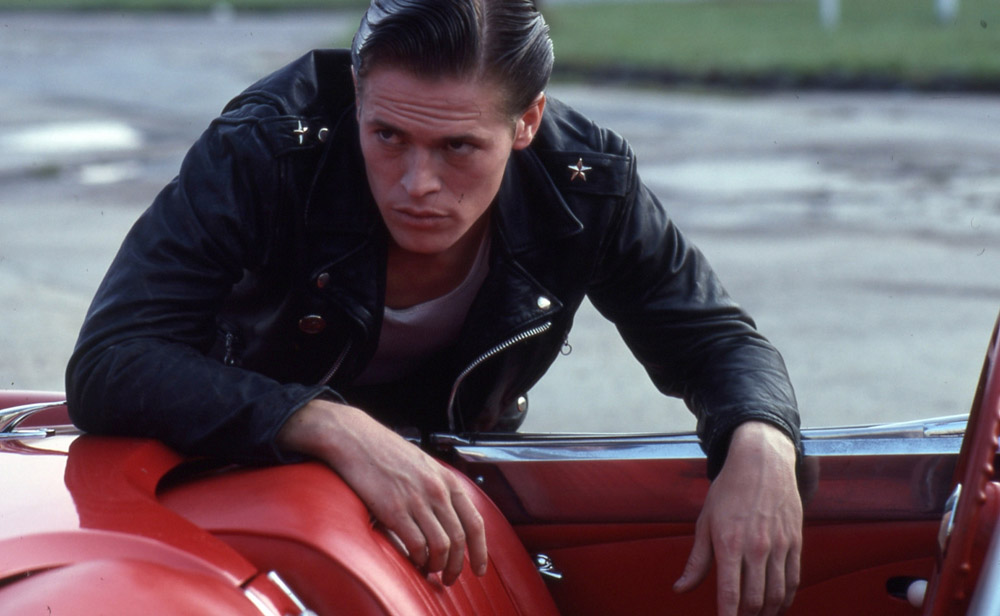
Like much of her work which came after; this debut feature from Kathryn Bigelow focuses on a group of brooding young men on the hunt for a buzz. It follows a gang of bikers who stop for a night in a nowhere town on their way to Daytona. It stars Willem Defoe in his first ever roll and is just as rose tinted, fetishized and homoerotic as the Anger short (see above) which inspired it. 


Before the Devil Knows you’re Dead
Sidney Lumet (2007)

Two brothers get trapped in a downward spiral when a plot to hold up their parents’ jewellery store goes tragically wrong.  For his 46th and final film, the late Sidney Lumet directs the late Phillip Seymour Hoffman for some clever, gloomy viewing; an old-school piece of film making from an old-school film maker.

2/28/2014


Ugetzu Monogatari
Kenji Mizoguchi (1953)

This major classic of Japanese cinema follows a clay pot crafter who makes good off the war and his friend who dreams of becoming a Samurai. Widely regarded as a forerunner for taking Japanese cinema west, Mizoguchi harnesses a dramatic use of shadow, supernatural elements and a generous helping of hubris for his moral tale of honour and indulgence.


Bernie
Richard Linklater (2011)
Jack Black gives a fine performance in this true life tale of a popular Carthage funeral director who kills the wealthy 81 year old widow (played by Shirley MacLaine) who he's been cozying up to. Dotted with interviews from after the fact, Linklater captures all the charms of his native Texans in his morally dense, quaintly funny and gosh darned honest film. Pre McConaissance Matt plays the slimey D.A.

2/03/2014


Oh the mountain of must see movies and my humble attempts to scale it...

Progress will be compiled at the end of each month and films are listed in order of preference. 

Monkey Business
Howard Hawkes (1952)
With Cary Grant playing a bumbling scientist whose chimpanzee accidently discovers the elixir of youth, this screwball comedy looks so off the wall it would be fair to assume that particular genre was coined merely to describe it. A young Marilyn Monroe, in a supporting role, offers a great example of her often overlooked comic timing and Grant is his usual brilliant self in the lead role, barking down phones and running amok with endless charm. Grant embodies all the old-school Hollywood heart throb traits, only rivaled perhaps by his mate Jimmy Stewart, but- to paraphrase a better critic than myself- while we love to see him win the girl, when he's slipping on an olive we love him all the more.

Umberto D.
Vittoria De Sica (1952)
4 years after his timeless Bicycle Thieves changed the cinematic landscape, Vittoria De Sica delivered this slightly more sentimental, but still starkly neo-realist effort which follows the trials of the titular Roman pensioner and his beloved dog Flike.  Umberto struggles with social welfare and a cruel landlady as decency seems to fade from the world around him. De Sica’s style looks a touch more decorative here than on previous outings but the director’s dark edge remains, shooting many scenes on the Roman streets and sugar-coating none of his disillusionment with Italian society.

There’s Always Tomorrow
Douglas Sirk (1956)
A decade after their seminal work in Billy Wilder’s peerless noir Double Indemnity, Fred MacMurray and Barbara Stanwyk were reunited here as, respectively, an underappreciated toy manufacturer and the old flame who returns to town. Gushing with all the melancholic longing that a title like that might suggest and with a vintage tender performance from Stanwyk this late Douglas Sirk effort has all the trappings of the melodramist’s best.

You Can Count On Me
Mark Lonergan (2000)

Mark Ruffolo plays a weary looking vagabond who takes a trip home to squeeze some cash from his sister (Laura Linney) but instead ends up playing father figure to her sheltered son (excellent Rory Culkin). Small town America; middle class problems; everyone grows: Lonergan’s film is a clear early omen of what we call the “Sundance film” today and bursting out from that particular festival, it may have even started the trend. 

1/05/2014


Afterlife
Hirokazu Kore-Eda (1998)
The recently deceased attend a halfway home to the afterlife where they are given a week to choose one memory, which is then re-enacted, filmed and kept for all eternity. There's a bang of film school off the plot but Kore-Eda finds a beautiful realism at its core as scripted scenes are blended with achingly tender true life interviews. They recall their lives, so we recall ours.


Christine
John Carpenter (1983)
A high school outcast discovers, restores, then falls for a battered up- and quite hormonal- Plymouth Fury with a sick mind of its own in this chromed out John Carpenter romp. Coming halfway through the director’s prolific 80s period, Carpenter provides another original score and a profanity fuelled script while barely breaking a sweat. Harry Dean Stanton shows up but strangely not as a sage mechanic. Bonus points none the less.


Meet me in St. Louis
Vincente Minnelli (1944)
The lives of 3 sisters are thrown into very mild disarray when their father decides to uproot the family to take a job in New York. Minnelli’s wafer thin escapist plot isn’t going to teach you much about real life (there was a war still raging in Europe after all) but his film does give us a chance to see America’s Suburban-utopia ideals in their infancy. Judy Garland- who would marry Minnelli the following year- is pitch perfect in the lead role but the standout performance comes from7 Year old Margaret O’Brien. The young actress can’t sing or dance per say, she’s just a kid having a laugh, but amidst all the flawless MGM gloss she makes for a remarkably vital and human presence. As young performances went, it was something of a landmark.


The Searchers
John Ford (1956)

John Wayne stars as a confederate civil war vet who sets out to track a group of Comanche Indians that slaughtered his family and kidnapped his niece. There’s so much about John Wayne’s bumbling character which, unlike many stars of that era, has not aged well but this John Ford classic still has the ability to startle. Considered by many the best western ever made, Ford’s incredible landscape shots of his hallowed Monument Valley have been an influence on countless film makers, not to mention the home world of a certain Luke Skywalker. 


12/05/2013


Oh the mountain of must see movies and my humble attempts to scale it...

Progress will be compiled at the end of each month and films will be listed in order of preference.


The Edge of Heaven
Fatih Akin (2007)
Set in Bremen and Istanbul, German/Turkish director Fatih Akin weaves families, friendships and lovers together for this wonderful, sprawling  film about the chance moments in life and the different paths they lead to. Strongly acted, it's twisting, turning script would go on to nab the screenplay gong at Cannes.

Eyes Without A Face
George Fanju (1960)
An ambitious doctor with a hunger for fame and notoriety will stop at nothing to give his scarred daughter a new face in this macabre slice of French Gothic. Hugely influential, it was shot by Eugen Schüfftan- DP for Fritz Lang’s Metropolis- and a featherweight Edith Scob is enchanting as the ghostly masked Christiane.

Bonnie and Clyde
Arthur Penn (1967)

Warren Beatty and Faye Dunnaway star as the two infamous outlaws in Arthur Penn’s game-changing exploitation film. The ratatat action might look dated today but the film’s significance- not to mention it’s two stunning leads- make it a worthwhile watch. Its shocking finale, which still draws a breathe today, took a hammer to the Hollywood rulebook and paved the way for the darkest and- many argue- best period in American film.

10/06/2013


Oh the mountain of must-see movies and my humble attempts to scale it...

Progress will be compiled at the end of each month with films listed in order of preference.

The Hustler
Robert Rossen (1961)
The shadows of neo realism hang heavy in the late night bars of this gritty New York tragedy. Paul Newman plays a pool hall hustler called ‘Fast’ Eddie Felson. Felson wants to beat the best in town but a boozed up ego seems to hold him back. He meets a similarly troubled woman (played by Twin Peak’s Piper Laurie) who helps him find his way. That is until a sly local gambler decides to back his talents. Felson hones his skills but in turn, his world crumbles. Laurie gives a performance of reserved brilliance and the young Newman- pocketing some incredible shots- is electric. In a wonderful moment Eddie talks about his cue having “nerve endings”. He’s trying to articulate what it feels like to have flare course through your veins or, perhaps, what it feels like to be alive. The film seems to catch that feeling in a bottle, both its strength and its fragility.

Zéro de conduit/L’Atalante
Jean Vigo (1933/1934)
Despite the apparent tragedy there is something nice about taking in a master director’s entire back catalogue in less than three hours. Tuberculosis was to end Jean Vigo’s life aged just 29. He only directed one feature film but is still held in the utmost regard. The French, who are hardly short on choices, named their premier directing award after him and it’s difficult to imagine Truffaut or his mates picking up a camera had L’Atalante not happened.
His medium length film Zero For Conduct, Inspired by Vigo’s days in boarding school, has a group of lads rise up against their teachers on the day of the school’s inspection. Light on its feet and flavoured with the sublime, it would be remade 35 years later as Lyndsay Anderson’s If… only Anderson would give the lads guns.
Then came L’Atalante. Silent era star Dita Parlo bursts with vitality as a recently married woman who takes her honeymoon on the titular barge before being tempted off by the bright lights of Paris. Its loose narrative style, earnest camera work and natural acting lend the film an enormous sense of youth and joy; for the art form or whatever else. Rightly considered one of the best of all time, Vigo would die less than a month after its release.

Imitation of Life
Douglas Sirk (1959)
Hollywood’s master of melodrama takes a look at racial issues in middle-class American life with this quietly subversive effort. The film follows the adult life of a single mother, played by Lana Turner, who is struggling to make it as an actress. Juanita Moore plays the woman she hires as a live in assistant. Both have daughters and so we see the four grow older together. Turner’s character makes it big on Broadway while Moore’s struggles to identify with her paler skinned daughter. As with most things of this nature, the film’s edge has blunted a touch over the years but even with Hollywood’s rose tinted glasses firmly in place, Sirk’s honesty about human nature still manages to shine through.

Roger and Me
Michael Moore (1989)
Michael Moore was already a dab hand at sticking that thorn in the side when he released his first feature documentary. General Motors CEO Roger Smith ransacked Moore’s once prosperous home-town of Flint Michigan when he decided to close the local auto factory. The film concerns Moore’s attempts to get an interview with the man. Everything that we would come to love about Moore is on show here- His dry delivery, use of music, wry sense of Irony- but as he sniggers at some defenceless local beauty queen, also what some would come to hate. 

9/17/2013


Oh the mountain of must see movies and my humble attempts to scale it...

Progress will be compiled at the end of each month with the films listed in order of preference.

At five In the Afternoon
Samira Makhmalbaf (2003)
Samira Makhmalbaf gives a beautiful, honest portrayal of the hopes and hardships of a young woman in the ruins of Kabul. The woman is thrilled with the idea of a female Afghan president and so enters her class election before her optimism is chipped away. Shot with tremendous balance, Makhmalbaf treats her subjects with absolute dignity no matter how tough their lives become. It might sound grim but there is an incredibly human beauty to Makhmalbaf’s film; the imagery is patient and composed and the natural performances flow with vitality as the women’s pale blue head scarves soak up the gentle light of the Afghan sun.


They Live…
John Carpenter (1988)
This iconic late 80s Sci-fi concerns a blue collar worker played by “Rowdy” Roddy Piper who happens upon a pair of special sunnies which reveal the world as it really is. Piper taps his WWF background for some ludicrous brawls but it’s in the film’s remarkable imagery- as seen above- that we get the most thrills. Imagery so powerful it inspired Shepard Fairey to plaster it onto the streets of LA. He later tweaked his work to make the defining image of Barrack Obama’s inaugural campaign. The work was sincere- and it certainly did the job- but what wonderful irony.

Youth of the Beast
Seijun Sazuki (1963)
An explosive lone gun with a connection to some sort of knitting club infiltrates the Tokyo yakuza and starts to play two bosses against each other. The film swaggers to its own slick, nihilistic tune with Sazuki’s eye for colour and composition providing a wonderful counterpoint to all the rat-a-tat action and loud mouth jabbering. Its renegade director, at 90, is still with us today.

Spellbound
Alfred Hitchcock (1945)
Hitchcock was already a sensation stateside and well into the studio groove by the time he released this dreamy effort. Gregory Peck plays a doctor who’s convinced he’s committed murder. The lovely Ingred Bergman plays a Freudian psychologist. She falls for Peck and so uses some fairly broad psychoanalysis to get to the bottom of things. The themes haven’t aged well but a wonderful Dali dream sequence and a couple of great shocks late on keep this amongst the director’s better works.

Notorious
Alfred Hitchcock (1946)
One year older and one year wiser, Hitchcock looked less concerned with cheap thrills and more with dream factory longing when he made this story of love and espionage. Bergman once again stars, this time as the daughter of a Nazi spy whose given the chance to make amends by infiltrating some friends of her Dad who’ve exiled to Rio. Cary Grant plays the agent in charge. You can see where this is going. 

7/31/2013


Oh the mountain of must see movies and my humble attempts to scale it...

Progress will be compiled at the end of each month and the films are listed in order of preference.


Blissfully Yours
Apichatpong Weerasethakul (2002)
We begin by following a young Burmese man’s efforts to gain a work permit but when the man picks up his girlfriend from a local factory Weerasethakul, in his now signature move, decides to veer the whole film off course. We’re 40 minutes on when out of nowhere a Thai version of Summer Samba plays on the radio and the opening credits roll. We attempt to regain our footing but as the couple enter the forest- an often spiritual place in the director's films- the man suddenly begins to narrate. Then everything gets sexual. It should be gratuitous but it’s not. Both wonderful and baffling, it started a fruitful relationship between the Thai director and Europe's premier film festival.

Rosetta
Jean-Pierre and Luc Dardenne (1999)
We meet Rosetta: a 17 year old girl with an alcoholic mother and a caravan home. Deeply ashamed of it all Rosetta wants nothing more than to find a job, have a friend and be a ‘normal person’. The Dardenne Brothers handheld shot most of the film over their young heroine’s shoulder in order to plunge the viewer in a pool of empathy. This fresh technique coupled with Émilie Dequenne’s staggering debut performance and the realist subject matter at its core affected people to such a degree that Belgium established a teenage minimum wage as a result. It also bagged the brothers their first Palme D’or.

Blow Out
Brian DePalma (1981)
Brian DePalma transports Antonioni’s Blow Up to the sultry world of 80’s New York noir for this cheeky effort. John Travolta plays a slasher movie sound guy who witnesses a car crash into a river while out recording some samples. He bravely dives in to save a young woman’s life but emerges embroiled in a political conspiracy with the only clues to solving it on his rolls of tape. DePalma often looked the brat of New American Cinema and with Blow Out he seems to be relishing in that role. Murals of America’s forefathers seem to look down disapprovingly as a “Liberty Bell Strangler” kills off women. What’s more the film’s biggest sleaze ball- and that’s saying a lot- has his final moment shot from above as he lies in the position of the crucified Christ. Class-A messin’ indeed.

Blow Up
Michelangelo Antonioni (1966)

Unlike the hyper reality of the DePalma film which succeeded it, Anotonioni’s 1966 thriller is a much slicker affair. David Hemmings plays a deep-eyed fashion photographer who believes he has witnessed a murder. He finds two lovers in a local park and proceeds to take their photo but only when the black and white grains of film are enlarged does the sinister event begin to reveal itself. Antonioni indulges in some touristy behaviour here- his vignettes of swingin’ 60s London feeling vacant at times- but the director still has bags of style. Hemmings is slick and slimy in the lead role and though it may be less playful than DePalma’s homage, Blow Up does benefit from a little nonchalance and a welcome dollop of ambiguity.
 
Twitter Facebook Dribbble Tumblr Last FM Flickr Behance